Why this page
La página The guardian peoples tells who they are, what they look after and which laws threaten their rights today. This one explains the ideas we work from, and where they come from.
When a Catalan, Spanish or European school connects with an Indigenous school, what comes into play are different ways of understanding what nature is, what a river is, what mountains are, and what relationship exists between human beings and the living planet we are passing through. Things are understood differently.
Everything stated here carries its source, and there is a full bibliography at the end.
What is thought here comes from two places. The first is many years of dealing with the peoples of Acre and, above all, the guidance of Txai Macedo, indigenist, friend and mentor to Adolf Sanz until his passing. That part is learned by going, listening and getting things wrong.
The second is the academic work that made it possible to name it. Several of the readings cited here —Blaser, De la Cadena, Escobar, Krenak, the Apu Ausangate case, the Yasuní and the Marañón river— came by way of the anthropologist Emanuele Fabiano, professor on the Master’s in Globalisation, Development and Cooperation at the University of Barcelona. We tell it in detail further down.
The river as kin
When an Indigenous community opposes a road, a mine or a dam, it is usually told as a conflict over resources: some want to exploit them and others to conserve them. But often the disagreement runs deeper, because the parties are not even talking about the same thing.
The anthropologist Mario Blaser, who worked for years with the Yshiro people of Paraguay, put it well: when the Yshiro protested against fishing rules, they were not defending a “fishery resource”; they were defending a web of reciprocity between humans and other-than-humans —the fish and their spirit owners— that those rules broke. For the State they were resources; for them, kin with whom a relationship is kept. Blaser calls these ontological conflicts and places his analysis within political ontology, a current which, within political ecology, holds that in socio-environmental conflicts what is at stake is not only interests over a shared world, but different worlds meeting one another. This is what anthropology calls the ontological turn.
Reducing it to “beliefs” or to “culture” —what classical anthropology would call a matter of cultural perspectives on one and the same object— settles the question in advance in favour of one side: the one that takes for granted that nature is a storehouse of things. That asymmetry is what authors such as Boaventura de Sousa Santos have called the coloniality of knowledge, and against it he proposes speaking of epistemologies of the South. That is why, in the Network, we try to listen to what those worlds have to teach.
Blaser, M. (2019). «Reflexiones sobre la political ontology de los conflictos medioambientales». América Crítica, 3(2), 63-79. En la misma línea, de la Cadena, M. (2020) analiza la cosmopolítica in the Andes —the politics that includes other-than-human beings, such as the tirakuna or the Pachamama— in Tabula Rasa, 33, 273-311.
Nature as a subject of rights
For centuries, Western law recognised only two things: persons and objects. A river, a forest or a mountain belonged to someone, and harm done to them was harm to their owner or, at most, to people’s health. Nature could not be a party in court.
The first change came in 1972, when the American legal scholar Christopher Stone published the article “Should Trees Have Standing?”. His argument was simple: companies and ships are also “persons” in law without being human; if the law can do that, it can also recognise a forest.
Half a centurand theter, that idea has entered constitutions and courts around the world, and it has largely done so hand in hand with Indigenous thought, for which a river has always been alive.
- Ecuador, 2008. Its Constitution was the first in the world to recognise nature —which it names Pacha Mama— como a subject of rights. Article 10 says so and articles 71 to 74 develop it: nature has the right to have its existence respected and to be restored. And the preamble commits the country to building a life in harmony with it in order to reach buen vivir, el sumak kawsay.
- Bolivia, 2010. The Law of the Rights of Mother Earth recognises the Earth as a living system with rights.
- Colombia, 2016. The Constitutional Court declared the río Atrato a subject of rights and ordered its protection together with the communities that live from it.
- Nueva Zelanda, 2017. The Whanganui river was granted legal personality after a claim by the Māori people, for whom the river is an ancestor.
- España, 2022. La Law 19/2022 granted legal personality to the Mar Menor lagoon and its basin, in Murcia: the first ecosystem in Europe with rights of its own. It came through a citizens’ legislative initiative led by professor Teresa Vicente and backed by more than 600,000 signatures, after years of agricultural run-off, green water and mass fish die-offs. Today anyone can go to court on the lagoon’s behalf. Teresa Vicente received the Goldman Prize for it in 2024.
- Perú, 2024. A court in Nauta (Loreto) recognised the rights of the río Marañón, deep in the Amazon, after a claim filed in 2021 by the Kukama women’s federation Huaynakana Kamatahuara Kana. Its president, Mari Luz Canaquiri, received the Goldman Prize for it in 2025. For the Kukama the river is a living being, and their dead live beneath the water.
It is a different way of framing the question. If the river has rights, harming it stops being a cost to be offset and becomes a violation. And those who have treated the river as kin for centuries come to be recognised as those who have looked after it best.
The Mar Menor case makes it possible to explain all this in a school here, without going to the Amazon. A lagoon a few hours from home slowly died from run-off, and the answer has been to grant it rights. The same idea that in Ecuador is said with the word Pacha Mama, in Murcia has been said with a law and six hundred thousand signatures.
Buen vivir and the critique of development
After the Second World War an idea took hold that now seems like common sense: that all countries are on the same ladder, some ahead and some behind. Those behind were called “underdeveloped”, and it was taken for granted that their task was to become like those ahead. Much of international cooperation was born from that.
El sumak kawsay in Quechua and suma qamaña in Aymara are translated as buen vivir, and they mean something very different from “living better”. They speak of living in balance, with the community and with all other living beings. The good life is life in relationship.
That idea has fed a deep critique of the very concept of “development”. The anthropologist Arturo Escobar, drawing on discourse analysis in a Foucauldian vein, showed in La invención del Tercer Mundo (1996) how, from the mid-twentieth century, the development apparatus divided the world into “developed” and “underdeveloped” countries and turned whole ways of life into deficiencies to be corrected. Against that, he and Gustavo Esteva propose speaking of postdevelopment (postdevelopment): not alternative forms de development, but alternatives al development, born of actually existing community practices. The critique comes with another: that of extractivism as an economic model —mining, oil, monoculture— which progressive governments also kept up, according to authors such as Eduardo Gudynas, even while recognising rights of nature in their constitutions.
Escobar sums it up in one word: pluriverse. Against the idea of One World —a single model of progress, a single idea of wealth— the pluriverse is, in the Zapatista phrase, “a world where many worlds fit”.
Arturo Escobar, «Más allá del development: postdevelopment y transiciones hacia el pluriverse», Revista de Antropología Social 21, 2012; y Arturo Escobar y Gustavo Esteva, «Postdevelopment a los 25», Polisemia 22, 2016.
Two Indigenous voices from Brazil
So far we have quoted anthropologists. But Indigenous peoples have been thinking and writing on their own account for decades, and their books are read today in universities around the world. Two essential names, both Brazilian.
Ailton Krenak
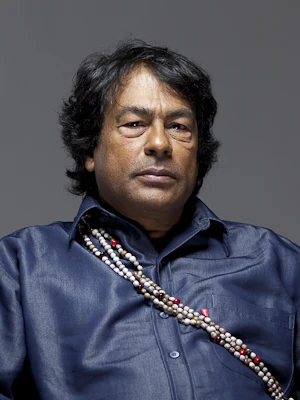
Of the Krenak people, from the Doce river valley (Minas Gerais). He became known in 1987, during the Constituent Assembly: while defending Indigenous rights before the deputies, he slowly painted his face black with jenipapo, as a sign of mourning. That image went round the country and Indigenous rights entered the 1988 Constitution.
En Ideas para postergar el fin del mundo (2019) he argues that for many Indigenous peoples the “end of the world” has already happened —through invasion, epidemics and dispossession— and that they are still here. He criticises the idea of a “humanity” separate from the rest of life, and that of a progress that knows only how to turn the Earth into merchandise. In 2023 he was elected to the Brazilian Academy of Letters, the first Indigenous person to hold a chair.
Davi Kopenawa
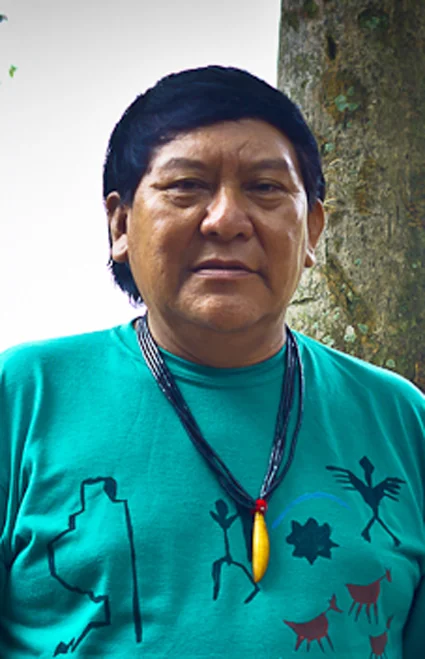
Shaman and spokesperson of the yanomamipeople, from the village of Watoriki, on the border between Brazil and Venezuela. As a child he lived through the epidemics that came with the roads and, as an adult, the invasion of the garimpeiros, the gold prospectors. His work was decisive in the 1992 ratification of the Terra Indígena Yanomami, and in 2004 he founded the association Hutukara. In 2019 he received the Right Livelihood Award, the so-called “alternative Nobel”.
With the anthropologist Bruce Albert he wrote La caída del cielo, a book of more than seven hundred pages in which he tells of his training as a shaman, his dealings with the xapiri —the spirits— and his view of us, whom he calls “the people of merchandise”: people who dream of objects and who, by emptying the earth, make the sky hold up worse and worse. It is a diagnosis, written from within, of what we here call the climate crisis.
Ailton Krenak, Ideas para postergar el fin del mundo (2019). Davi Kopenawa y Bruce Albert, La caída del cielo. Palabras de un chamán yanomami (2010; edición en español, 2023).
Paulo Freire and education as dialogue
Paulo Freire (Recife, 1921 - São Paulo, 1997) began by teaching literacy to peasants in north-eastern Brazil and ended up changing how education is understood around the world. The 1964 military coup led to his imprisonment and then exile; in 1968 he wrote the book that made him known, Pedagogía del oprimido.
His most quoted critique is of “banking education”: the school that treats pupils as an empty account where the teacher deposits knowledge, and where learning means repeating. Against that he proposed a dialogicaleducation, one that starts from the life and the words of the learner —what he called generative words— and turns the class into a conversation about the real world.
From this come two ideas that underpin much of what we do: that no one educates anyone else, and no one educates themselves alone; people educate one another, and that reading the world precedes reading the word. En Pedagogía de la autonomía (1996) he put it even more plainly: to teach is not to transfer knowledge, but to create the conditions for producing it.
That is why we read Freire here alongside Escobar or Blaser: if an Indigenous community has its own knowledge of its land, a school that arrives to “bring them” knowledge is doing banking education on an international scale. The alternative is dialogue, which is exactly what the Network attempts: Indigenous teachers and teachers here preparing materials together, and pupils speaking to each other as equals.
Paulo Freire, Pedagogía del oprimido (1968), La importancia del acto de leer (1981) y Pedagogía de la autonomía (1996). He is also a Brazilian author: in Brazil he was declared patron of national education.
What this means in a school
A school can teach the Amazon as a green backdrop full of exotic animals and people in feathers, or it can teach it as a land inhabited by peoples with rights, with languages and with their own ideas about how to live.
When pupils in Catalonia talk by video call with pupils at the Escola Ixubãy, they discover that there is more than one reasonable way of being in the world. And when Indigenous teachers prepare their own materials in their own language, they teach something we do not know here.
That is why we say that knowledge travels in both directions. It is the condition for an educational exchange not to repeat, in miniature, the old story of development.
Conceptual framework
These are the notions that the anthropology of development and political ecology work with today, and that underpin everything above. Each comes with an example, because concepts without examples are no use in a classroom. They are defined precisely and with their source, for anyone who wants to read further.
- Ethnocentrism and cultural relativism
- Judging other cultures by the yardstick of one’s own (ethnocentrism) as against understanding them on their own terms (cultural relativism). Lévi-Strauss set it out in Raza e historia (1952): there are no backward cultures, there are cultures oriented towards different things. In the classroom this is very concrete: saying that a community “still” lives in the forest assumes that everyone’s destiny is the city. Describing it by what it knows how to do —navigate, heal, farm without exhausting the soil, keep a language alive— is something else. Methodological relativism does not require approving of everything: it requires understanding before judging.
- Ontological turn and political ontology
- A current that stops asking how represent the world and starts asking what worlds their practices bring into being. Political ontology studies the conflicts that arise when those worlds meet unequally (Blaser, 2009, 2019). The difference is practical: if the disagreement is about “beliefs”, a consultation procedure will do; if it is about worlds, what is at stake is whether a way of life can go on existing. That is why many so-called environmental conflicts are not solved with more technical information.
- Cosmopolitics
- Politics that includes other-than-human entities —mountains, rivers, spirits— as actors to be reckoned with and not merely as setting or resource (Stengers; de la Cadena, 2020). In the Andes, a negotiation over a mine may include a hill owed respect; in the Juruá, the river and the owners of the fish. Recognising that changes who sits at the table and what counts as harm.
- Pluriverso
- Against the “One World” of modernity —a single model of rationality, economy and progress— the idea that many worlds exist and can coexist. In Zapatista terms, “a world where many worlds fit” (Escobar, 2012; Kothari et al., 2019). Applied to education, the pluriverse does not mean relativising everything, but accepting that a school in Begues and a Puyanawa school can teach different things and that neither is at the other’s starting line.
- Postdevelopment
- A critical current that does not seek better development but a way out of the development frame: alternatives to development built from the communities (Escobar, 1996, 2009; Esteva). It criticises one particular way of doing cooperation: the one that arrives with the project already written, measures success by other people’s indicators and leaves when the grant runs out. The question that settles it is who decides what is needed.
- Buen vivir (sumak kawsay, suma qamaña)
- Andean principle of living in balance with the community and with nature, written into the constitutions of Ecuador (2008) and Bolivia (2009). It does not mean material wellbeing, nor “living better” than others. It has its critics too: authors such as Víctor Bretón have pointed out that, once in the Constitution, buen vivir has coexisted with extractive policies; it is worth telling the principle apart from its political use.
- Extractivism
- An economic model based on the intensive extraction of natural resources for export, with little local processing and heavy social and environmental impact (Gudynas). In the Amazon it takes the form of gold, timber, oil, soya and cattle. Its effect on schooling is direct: when a road or a dredger arrives, the river, the work and young people’s expectations change before anyone has been asked anything.
- Rights of nature and legal personality
- Recognition of natural entities as subjects of rights, able to be represented in court (legal standing). Ecuador (2008), Bolivia (2010), Atrato river (2016), Whanganui river (2017), Mar Menor (2022), Marañón river (2024). The device does not solve the problems on its own —someone has to monitor, and restoration needs a budget— but it changes the starting point of a case: harm no longer has to be translated into harm to a person.
- Banking education and dialogical education
- The contrast drawn by Paulo Freire (1968) between teaching as depositing content in a passive subject and teaching as dialogue starting from the learner’s experience. It is easy to spot in practice: a banking workshop explains “the Amazon” and tests whether it has been memorised; a dialogical workshop starts from the river or the forest the pupils have nearby and sets it talking with the one at the other school.
Where these readings come from
What holds this page up is years of work with the peoples of Acre. The readings that help to name it came by many routes, and one of them deserves thanks.
Emanuele Fabiano is an anthropologist, with a doctorate in Anthropology and Ethnology from the École des Hautes Études en Sciences Sociales in Paris. Since 2011 he has carried out research among the urarina of the Peruvian Amazon, in the Chambira river basin: how the idea of a person —human and other-than-human— is built there, and what social, ritual and political effects extractive processes, that is oil and timber, have on that way of living.
He teaches on the Master’s in Globalisation, Development and Cooperation de la University of Barcelona, run jointly with the Fundació Món-3 and the Fundació Solidaritat UB. Within that Master’s he teaches anthropology of development. Adolf Sanz Monfort, president of the association and executive director of the Escola Intercultural Amazonia, has completed the first year. From his classes and from the reading he made available to students came several of the authors and cases that appear on this page: Mario Blaser’s political ontology, Marisol de la Cadena’s cosmopolitics, Arturo Escobar’s postdevelopment and pluriverse, the words of Ailton Krenak, the Apu Ausangate, the Yasuní and the recognition of the Marañón river as a subject of rights.
Being able to speak of these things with the right words owes a great deal to those classes and that reading. Thank you.
The interpretations, the mistakes and the way of telling it are ours alone.
Bibliography
Twenty-six references, in academic format.
See the full bibliography
- Blaser, M. (2019). «Reflexiones sobre la political ontology de los conflictos medioambientales». América Crítica, 3(2), 63-79.
- Campanera Reig, M. (2026). «El corazón de la vida: el río Marañón, desde la perspectiva kukama». Revista Kawsaypacha, 17, D-006.
- De la Cadena, M. (2020). «Cosmopolitics indígena en los Andes. Reflexiones conceptuales más allá de la “política”». Tabula Rasa, 33, 273-311.
- Escobar, A. (1996). La invención del Tercer Mundo. Construcción y deconstrucción del development. Bogotá: Norma. (2.ª ed., 2011).
- Escobar, A. (2009). «El “postdevelopment” como concepto y práctica social». Revista Española de Desarrollo y Cooperación, 24, 81-99.
- Escobar, A. (2012). «Más allá del development: postdevelopment y transiciones hacia el pluriverse». Revista de Antropología Social, 21, 23-62.
- Escobar, A. y Esteva, G. (2016). «Postdevelopment a los 25: sobre “estar estancado” y avanzar hacia adelante, hacia los lados, hacia atrás y de otras maneras». Polisemia, 22, 17-32.
- Freire, P. (1970). Pedagogía del oprimido. Madrid: Siglo XXI. (Original de 1968).
- Freire, P. (1997). Pedagogía de la autonomía. Saberes necesarios para la práctica educativa. Madrid: Siglo XXI.
- Geertz, C. (1973). La interpretación de las culturas. Barcelona: Gedisa.
- Kopenawa, D. y Albert, B. (2010). La caída del cielo. Palabras de un chamán yanomami. Barcelona: Capitán Swing (ed. española).
- Kothari, A., Salleh, A., Escobar, A., Demaria, F. y Acosta, A. (eds.) (2019). Pluriverso. Un diccionario del postdevelopment. Quito: Abya-Yala.
- Krenak, A. (2019). Ideas para postergar el fin del mundo. Buenos Aires: Prometeo.
- Lévi-Strauss, C. (1952). Raza e historia. París: UNESCO.
- Lovejoy, T. y Nobre, C. (2018). «Amazon Tipping Point». Science Advances, 4(2).
- Stone, C. D. (1972). «Should Trees Have Standing? Toward Legal Rights for Natural Objects». Southern California Law Review, 45, 450-501.
- FAO y FILAC (2021). Los pueblos indígenas y tribales and the gobernanza de los bosques. Santiago de Chile: FAO.
- Science Panel for the Amazon (2021). Amazon Assessment Report. Nueva York: UN SDSN.
“The Network grows with you” campaign
We are looking for 50 regular supporters this school year
A monthly contribution, however small, lets us plan the school year without depending on a grant.