
Música
Album «Dimãnã ewe yûbabu»
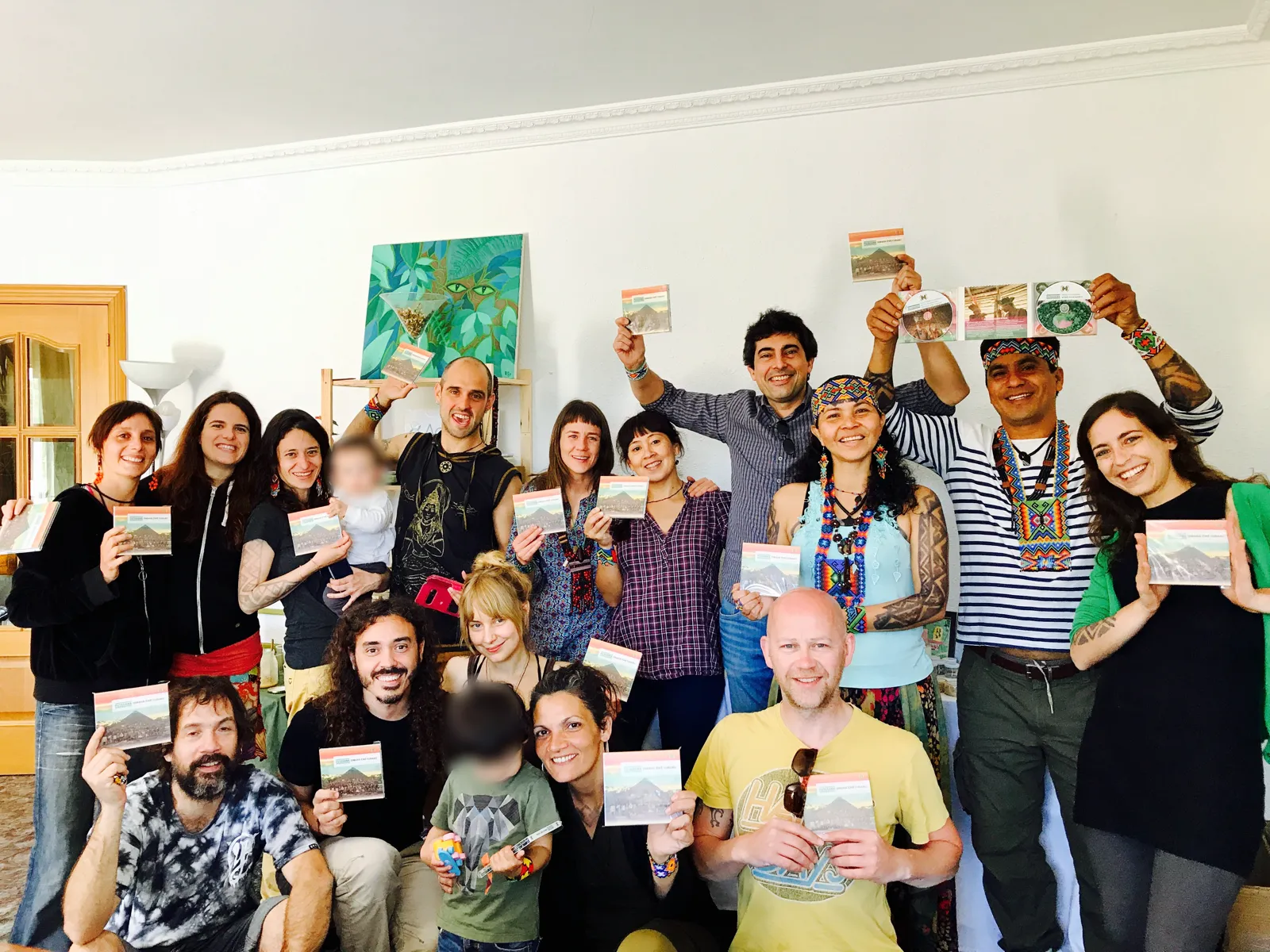
«Dimãnã ewe yûbabu» is the first ever album by the Puyanawa people: a dream of the community driven by Luiz Puwê y Vari Sharanayá Puyanawa. It is a double album: one disc brings together the traditional ceremonial chants passed down by their ancestors over generations, and the other holds songs written by Puwe and Vari and performed with professional musicians.
Its aim is to recover and safeguard the Puyanawa musical and cultural tradition and to share chants meant to heal Mother Earth. The recordings were made in the village in 2016, and the recording, mixing, mastering and production were funded in 2017 through a crowdfunding campaign on Indiegogo —the first of its kind for the Puyanawa people— run by Guardians de l’Amazònia together with the associations La Maloka and La Encantada.
Musicians: Erico Moreira, Jabu Morales, Victor Salvatti, Alexander Lora and Pablo Giménez.
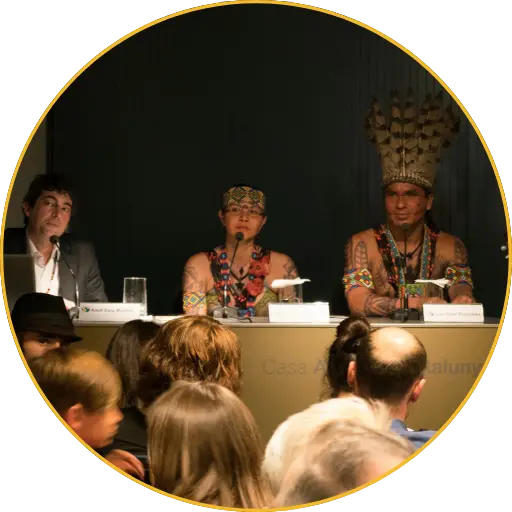
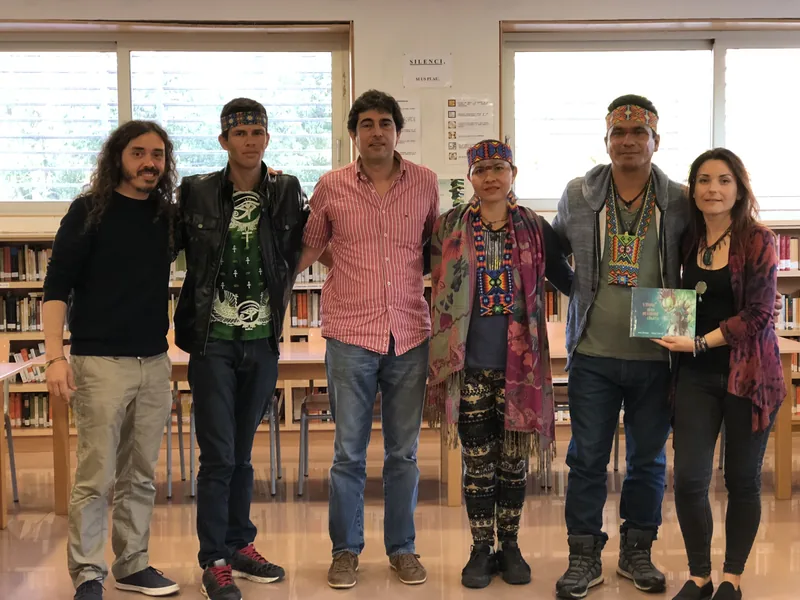
The album was presented at Casa Amèrica Catalunya (Barcelona) with Vari, Puwe and Adolf Sanz.
The crowdfunding campaign (2017)
“We are Luiz Puwê Puyanawa and Vari Sharanayá Puyanawa, of the Puyanawa people, in the Terra Indígena Puyanawa (Mâncio Lima, Acre, Brazil). We ask for your help to make our people's dream come true: to have our music recorded on a double album.”
The campaign set out to fund the recording, mixing, mastering and production of the first Puyanawa album. As well as supporting its release, backers could get crafts, share a traditional chanting and healing ceremony or visit the village during its festivals.
| Musicians (5) | 1.050 € |
|---|---|
| Recording | 1.440 € |
| Mixing and production | 1.700 € |
| Mastering | 1.000 € |
| Graphic design | 800 € |
| Manufacturing | 1.600 € |
| Rewards | 700 € |
| Shipping | 800 € |
| Total | 9.090 € |
Rewards: a download of the album, the CD, the CD with a bracelet or craftwork, a thank-you in the credits and week-long stays in the Puyanawa village. You can watch the campaign video below.
Listen on Spotify
Clicking will load the Spotify player, which may store data in your browser. You can also open CD 1 (opens in a new window), el CD 2 (opens in a new window) o the Puyanawa page (opens in a new window) on Spotify.
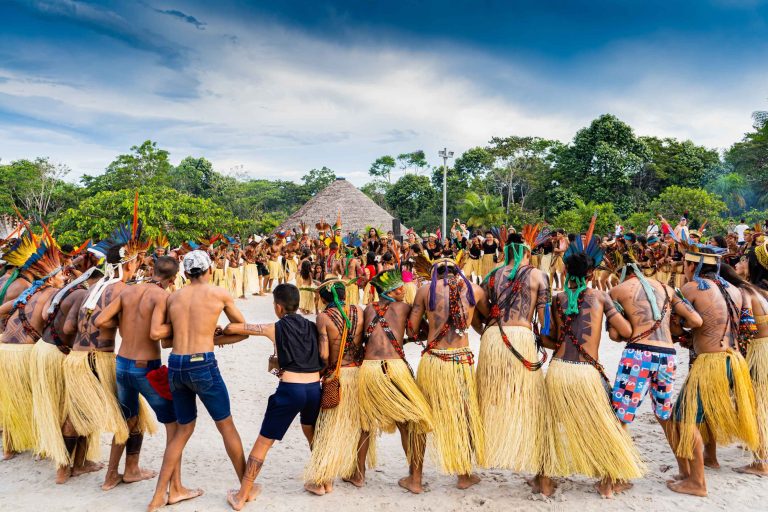
Recording in the village (2016)
Recording in the studio
Videos
Financial report · Album (2016-2017)
Figures from the project's financial report.
Album «Dimãnã ewe yûbabu» (2016-2017)
- Total cost7.426,81 €
- Funding7.426,81 €
| Item | Amount | % |
|---|---|---|
| Payment to the musicians | 1.050,00 € | 14,1 % |
| Recording (Asociación Musical Faristol) | 1.452,00 € | 19,6 % |
| Mixing and production (Faristol) | 1.815,00 € | 24,4 % |
| Mastering | 1.060,00 € | 14,3 % |
| Graphic design | 700,66 € | 9,4 % |
| Manufacturing of 400 double CDs (Duplicat) | 1.349,15 € | 18,2 % |
| Total | 7.426,81 € | 100 % |
| Item | Amount | % |
|---|---|---|
| Crowdfunding campaign (Indiegogo, $2,236) | 1.887,01 € | 25,4 % |
| Oxford School Idiomas Molins | 2.000,00 € | 26,9 % |
| Associació La Maloka | 1.050,00 € | 14,1 % |
| Profimática S.L. | 250,00 € | 3,4 % |
| Donations from individuals | 800,00 € | 10,8 % |
| Contribution from Adolf Sanz | 779,80 € | 10,5 % |
| CD sales | 660,00 € | 8,9 % |
| Total | 7.426,81 € | 100 % |
Of the 400 CDs produced, 200 were given to the Puyanawa people.
An EiAmazonia teaching resource · Illustrated storybook in Catalan and Puyanawa
Els Puyanawa i l’Eruga de colors – Hêda Cêkaya
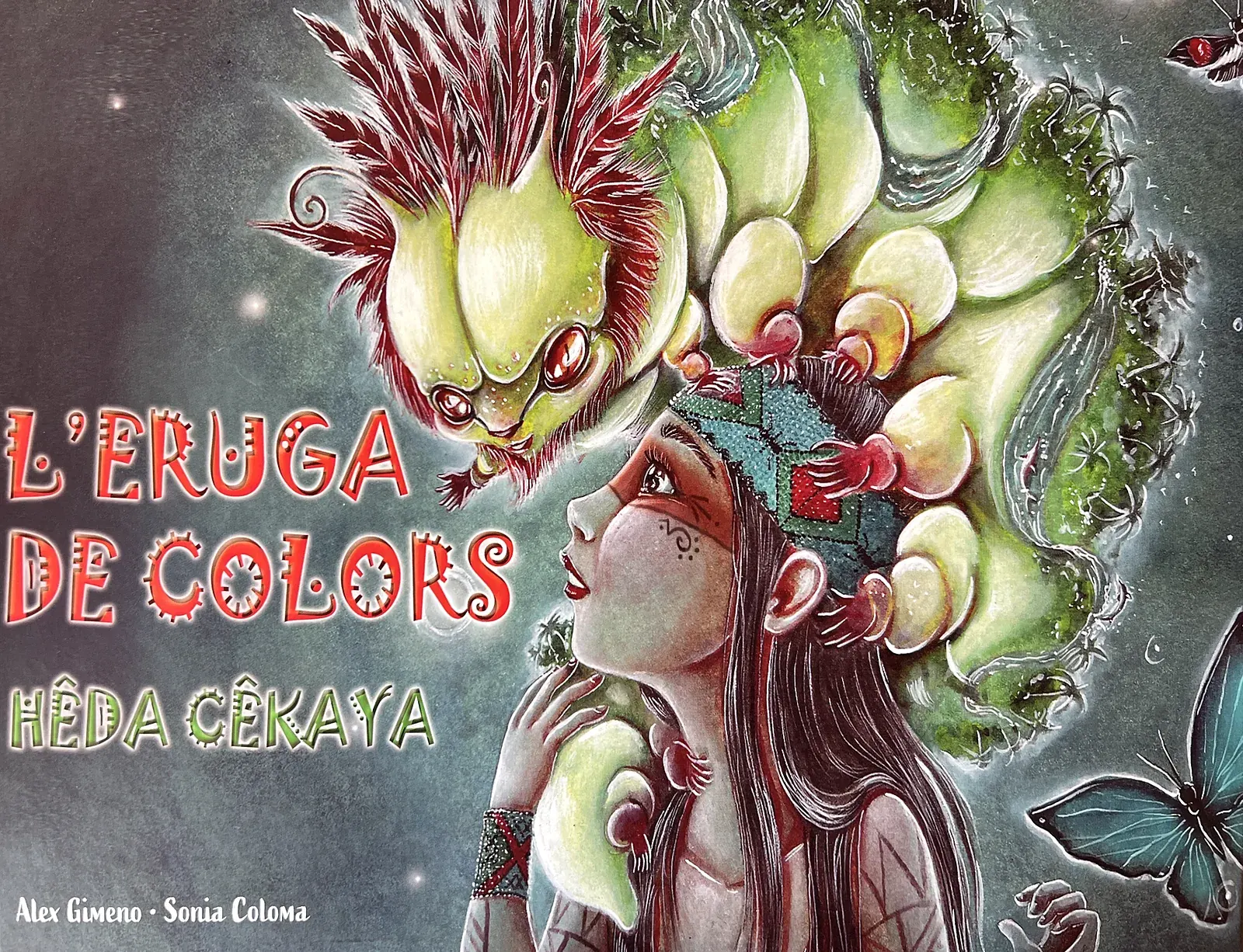
Els Puyanawa i l’Eruga de colors – Hêda Cêkaya
Hêda Cêkaya
- Text
- Alex Gimeno Martínez
- Illustrations
- Sonia Coloma Benítez
- Languages
- Catalan and the Puyanawa language
- Translation into Puyanawa
- Railda Manáita, one of the last survivors of the years of slavery, and her daughter Maria Renilza Manáita
- Published by
- Associació Guardians de l’Amazònia
- Editions
- First, April 2018 · Second, June 2021
- ISBN
- 978-84-09-31088-3
- Legal deposit
- B-10032-2021
- Supported by
- Molins Solidària and Fons Català de Cooperació al Desenvolupament
An EiAmazonia teaching resource
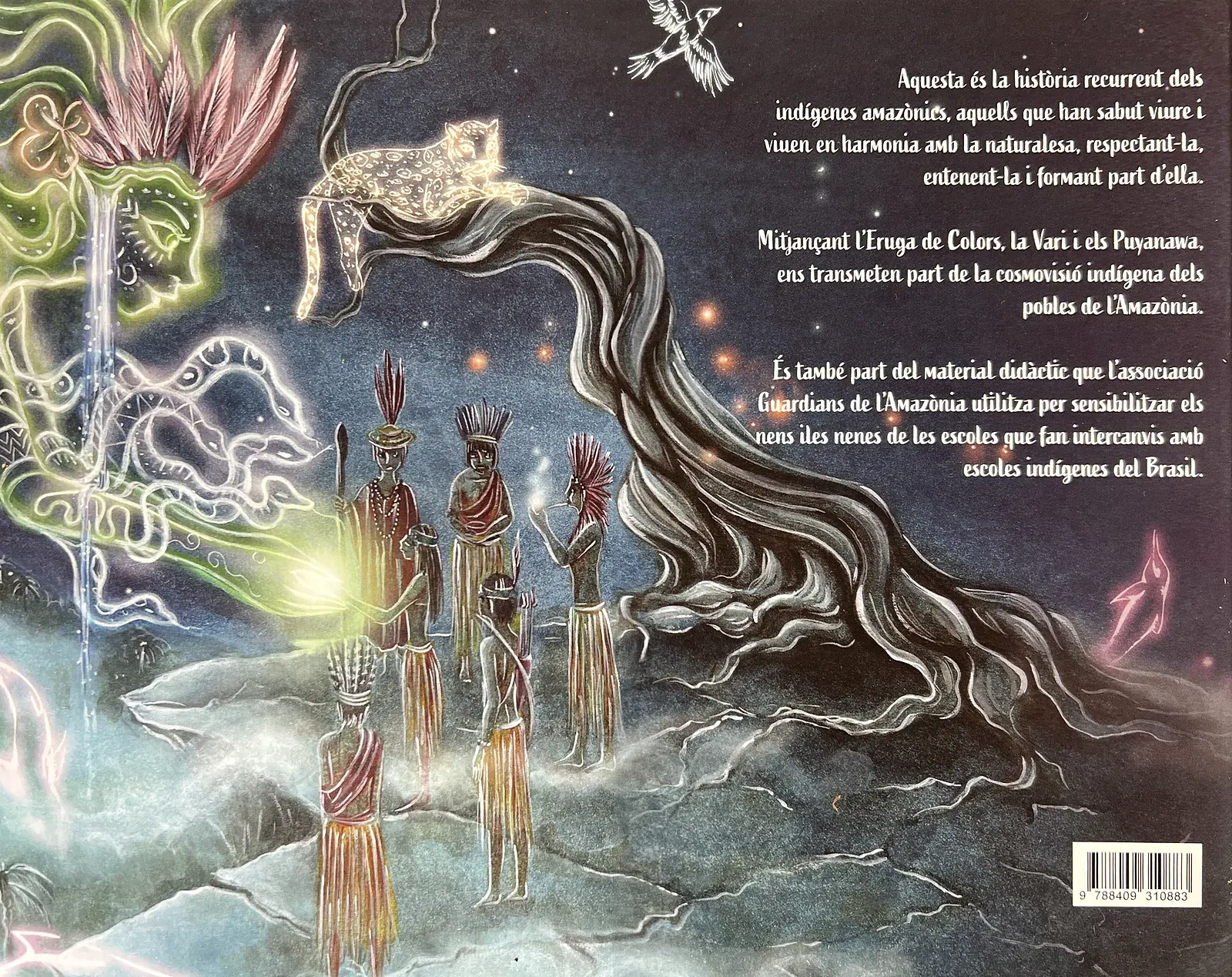
«Els Puyanawa i l’Eruga de colors – Hêda Cêkaya» is part of the teaching materials that the Associació Guardians de l’Amazònia uses with children in the schools that take part in exchanges with Indigenous schools in Brazil, within the Amazon Guardian Schools Network. Through Vari and the Puyanawa, the story passes on part of the worldview of the Indigenous peoples of the Amazon: living in harmony with nature, respecting it, understanding it and being part of it.
The second edition (2021), published by Guardians de l’Amazònia, was made possible with the support of Molins Solidària y del Fons Català de Cooperació al Desenvolupament, and of the schools taking part in the Network. The book ends with a line that sums up its spirit: “Txai: half of you is in me and half of me is in you.”
A story based on real events
Vari is a Puyanawa girl who lives happily in the Amazon rainforest: she plays in the river with her friend Puwê and her older brother Xaynay, learns the dances and chants of her elders and listens for hours to the stories of her grandfather, who knows how to speak with plants and animals in dreams.
One night armed men arrive, take their land and force the survivors to work on the plantations, separated and unable to speak their language or sing their songs. Years go by and Vari almost forgets everything… until she dreams of a colourful caterpillar, a spirit caterpillar that speaks with the voice of her grandfather, the shaman, teaches her to see the world through the eyes of animals and reminds her that everything is connected: “half of you lives in me and half of me lives in you”.
With that message, Vari, Puwê and Xaynay bring hope back to their people and lead them to recover their language, their land and their forest. A warm story, made to be read at home and at school, about memory, respect for nature and the strength of a people.
Read the book’s full presentation
Like so many peoples of the Amazon, the Puyanawa —who used to call themselves Peyawakebu, “children of the leaf of the paxiúba palm and of the birds that dance with their wings”— were contacted and enslaved from 1905 onwards by colonel Mâncio Lima, a rubber baron and landowner. Forced into hard labour, their families split apart and their language and spirituality banned, they lived like that for fifty years.
Today the story has changed: many young people in the community have spent years reclaiming the legacy of their ancestors. Out of that commitment to Amazonian peoples, who have known how to live in harmony with nature, Guardians de l’Amazònia was born, to help protect their culture, their traditions and their knowledge, and to pass that legacy on to new generations.
Alex Gimeno tells this epic story of resilience, based on real events, with great sensitivity, and Sonia Coloma illustrates it with realism and a style that seems to spring from the same magical place as the tale. The book gives special thanks for their struggle to Vari, Puwe, chief Shaynay, Maria Alice, Hurake and the whole Puyanawa people; to the anthropologist Terri Valle de Aquino, to the sertanista Txai Macedo, and to Dona Railda and her daughter Maria Renilza Manáita, who translated it into Puyanawa.
Summary of the book's introduction, signed by Adolf Sanz Monfort, president of the Associació Guardians de l’Amazònia
The story told on video
Illustrations
Illustrations by Sonia Coloma Benítez. Click an image to enlarge it.
Inside a page: Catalan and Puyanawa
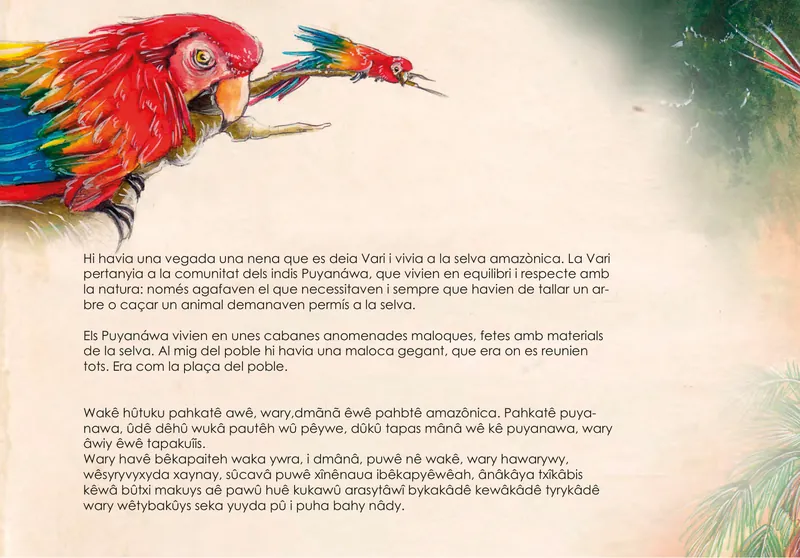
The storybook in schools and libraries
Financial report · Storybook (2016-2021)
Figures from the project's financial report.
1st edition (2016-2019) · Co-published with Punto Rojo, 100 copies
- Total cost3.824,00 €
- Funding3.824,00 €
- Contribution from the association50,00 €
| Item | Amount | % |
|---|---|---|
| Illustrations | 2.651,00 € | 69,3 % |
| Co-publishing and printing | 1.173,00 € | 30,7 % |
| Total | 3.824,00 € | 100 % |
| Item | Amount | % |
|---|---|---|
| Oxford School Idiomas Molins | 2.651,00 € | 69,3 % |
| Contribution from Adolf Sanz | 613,00 € | 16,0 % |
| Donations from individuals | 510,00 € | 13,3 % |
| Contribution from the association | 50,00 € | 1,3 % |
| Total | 3.824,00 € | 100 % |
2nd edition (2021)
Grant: project no. 3538 of the Fons Català de Cooperació al Desenvolupament (Molins de Rei town council call)
- Total cost5.960,21 €
- Funding5.960,21 €
- Contribution from the association1.256,21 €
| Item | Amount | % |
|---|---|---|
| Printing of 1,524 books (EGEDSA) | 4.298,41 € | 72,1 % |
| Exhibition panels (Copy-Trade) | 897,65 € | 15,1 % |
| Photo printing (Copy-Trade) | 506,65 € | 8,5 % |
| Postage | 257,50 € | 4,3 % |
| Total | 5.960,21 € | 100 % |
| Item | Amount | % |
|---|---|---|
| Fons Català / Molins de Rei town council grant | 4.704,00 € | 78,9 % |
| Contribution from the association | 1.256,21 € | 21,1 % |
| Total | 5.960,21 € | 100 % |
Project total (1st and 2nd editions)
- Total cost9.784,21 €
- Funding9.784,21 €
- Contribution from the association1.306,21 €
Sum of the financial reports for the two editions. This total includes the 1,404.30 € of the «Poble Puyanawa» exhibition (panels and photo printing), which were accounted for within the same Fons Català project no. 3538; that is why they also appear in the financial report of the exhibition and are not counted twice in the association’s overall figures.
Costs according to the invoices. The grant was received in two bank payments under the reference «Projecte 3538»: 4.470,00 € en 2021 y 234,00 € en 2022. Los paneles y las fotografías de la exposición se justificaron dentro de este mismo proyecto, por lo que también figuran en el financial report of the exhibition; they are not an additional cost.
Bring it to your classroom
Fill in the form to link your school to the Amazon Guardian Schools Network and we will tell you how to get the storybook and how to work with it in class.
Would you like the storybook for your school?Documentary · On hold for lack of funding
Puyanawa’s Sacred Land
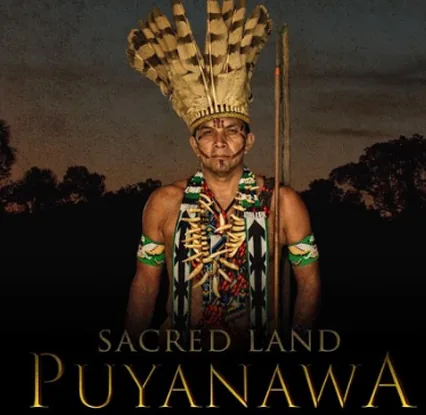
Puyanawa’s Sacred Land (in English, Sacred Land – Peyabakebu Puyanawa) is a documentary made together with the Puyanawa people, covering 120 years of their history. For now, the project is on hold for lack of funds. If you or your organisation would like to help finish it, write to us.
Through the story of the Puyanawa, the documentary also sets out to speak about the fate of many other Indigenous peoples of the Amazon.
Some of its footage appears in the TV Juruá Online report (2016), filmed while the Puyanawa album was being recorded.
Filming in the village
Teasers
Financial report · Documentary (2016-2021)
Figures from the project's financial report.
Documentary (2016-2021) · On hold
- Total cost16.911,66 €
- Funding16.911,66 €
- Contribution from the association12.911,66 €
| Item | Amount | % |
|---|---|---|
| Audiovisual equipment (2016) | 5.455,86 € | 32,3 % |
| Flights (2016 and 2019) | 4.120,77 € | 24,4 % |
| Accommodation | 650,00 € | 3,8 % |
| Travel costs (2019) | 560,00 € | 3,3 % |
| Car hire | 197,78 € | 1,2 % |
| Other materials and technical equipment | 1.227,25 € | 7,3 % |
| Script | 2.500,00 € | 14,8 % |
| Professional services (2016) | 2.000,00 € | 11,8 % |
| Animation | 200,00 € | 1,2 % |
| Total | 16.911,66 € | 100 % |
| Item | Amount | % |
|---|---|---|
| Eral Grup, Estrategia & Management | 2.500,00 € | 14,8 % |
| Oxford Idiomes | 1.500,00 € | 8,9 % |
| Contribution from the association | 12.911,66 € | 76,3 % |
| Total | 16.911,66 € | 100 % |
The project is on hold waiting for funding. If you are interested in contributing to or funding this documentary, write to us: we are looking for people, organisations and companies who want to make it happen.
Photography exhibition
Poble Puyanawa
The exhibition «Poble Puyanawa» invites you to discover the culture, heritage and resilience of the Puyanawa people through photography and panels telling their story: the forest, slavery on the rubber estates and the recovery of their language, their dances and their identity.
Portraits: Blat García Vergés and Adolf Sanz Monfort (photo retouching: Alba Rodríguez Núñez). Photographs on the panels: Sebastien Sintz, Adolf Sanz Monfort and Franz Pagnier.
Financial report · Exhibition (2020-2021)
Figures from the project's financial report.
«Poble Puyanawa» exhibition (2020-2021)
- Total cost1.404,30 €
| Item | Amount | % |
|---|---|---|
| Printing of 46 photographs on PVC (2020) | 506,65 € | 36,1 % |
| PVC panels, design and plaque (2021) | 897,65 € | 63,9 % |
| Total | 1.404,30 € | 100 % |
These costs were reported within project no. 3538 of the Fons Català, so they also appear in the financial report of the storybook (2nd edition); they are not an extra cost.
Support for the peoples of the forest · Acre (Brazil)
Território Indígena project (2017)
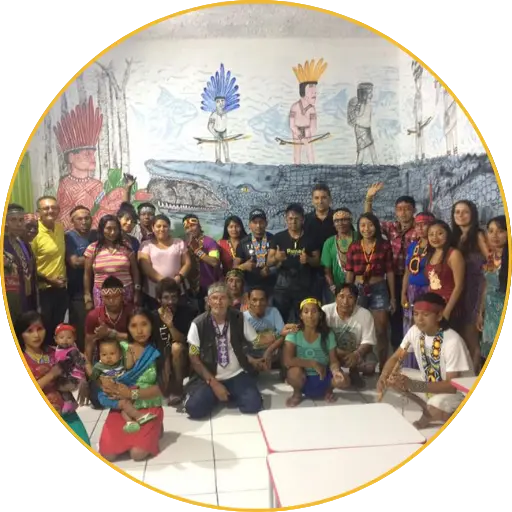
Território Indígena: Cultura, Produção e Gestão Ambiental was a support project led in 2017 by Txai Macedo and Laura Rachid, with the collaboration of Guardians de l’Amazònia.
Its aim was to strengthen the work of AMAAIAC (Associação do Movimento dos Agentes Agroflorestais Indígenas do Acre) in the struggle for land, culture, traditional food and ancestral knowledge, through a three-month journey: two of those months in Huni Kuin villages on the Jordão river, also passing through the Ashaninka and Kuntanawa peoples. As Txai explained, it was about reclaiming and reviving cultures and going deeper into traditional wisdom.
Txai Macedo and CPI-Acre
Txai Macedo (Antônio Luiz Batista de Macêdo, 1952-2026) was a rubber tapper, sertanista, Indigenous rights advocate, poet and singer from the Juruá valley. From the 1970s he worked alongside the anthropologist Terri Valle de Aquino and later, at the Comissão Pró-Indígenas do Acre (CPI-Acre), travelled rivers, villages and rubber estates to make communities aware of their rights and to support the demarcation of Indigenous lands. A friend of Chico Mendes, he was a key figure in the Aliança dos Povos da Floresta and in the creation, in 1990, of the Alto Juruá Extractive Reserve.
More about Txai Macedo and CPI-Acre
CPI-Acre, founded in 1979, is one of the leading organisations defending the Indigenous peoples of Acre. Since 1983 it has trained Indigenous teachers and agroforestry agents and has promoted an intercultural, bilingual school in which the peoples themselves write their own curricula and materials — an approach very close to that of the Amazon Guardian Schools Network.
Txai lived on Puyanawa land and supported the bond between Guardians de l’Amazònia and this people from the very beginning; the storybook «Els Puyanawa i l’Eruga de colors – Hêda Cêkaya» gives him special thanks. He died in 2026 and today we remember him as an honorary member in memoriam. Read about his life in “About us”.
Project videos
“The Network grows with you” campaign
We are looking for 50 regular supporters this school year
A monthly contribution, however small, lets us plan the school year without depending on a grant.