Guardians, in the literal sense
The Amazon covers some 6.7 million square kilometres across nine countries —thirteen times the size of Spain— and holds close to 40% of the tropical forest left on the planet. Above all it is a vast water pump and a carbon store. Every day the trees release billions of litres that travel as “flying rivers” and fall as rain over half a continent, and the forest keeps in its wood and its soil a decisive share of the carbon that is not in the atmosphere.
The Amazon is home to 47 million people, among them close to 2.2 million Indigenous people from 410 peoples. It is an inhabited land, and those who have lived there for millennia are the ones who have kept it best.
The figures say so. Where Indigenous peoples hold recognised land, the forest is still standing.
-
2.2 million
Indigenous people live in the Amazon, from 410 different peoples, each with its own language, memory and way of relating to the land.
Science Panel for the Amazon, Amazon Assessment Report 2021
-
2.5 times
less deforestation inside Brazil’s Indigenous lands with recognised rights than outside them (2.8 times in Bolivia and 2 in Colombia).
FAO and FILAC, “Forest governance by Indigenous and tribal peoples”, 2021
-
320-380 million
hectares of forest are cared for by Indigenous and tribal peoples in Latin America, storing some 34 billion tonnes of carbon.
FAO and FILAC, 2021
That FAO and FILAC report reviewed more than three hundred studies published over twenty years. Its conclusion strikes us as decisive: protecting the forest and protecting the rights of those who live in it are the same thing. Where land is titled and the community can decide, the chainsaw stops; where it is not, it comes in. There is no climate justice without justice for Indigenous peoples.
Why this is urgent
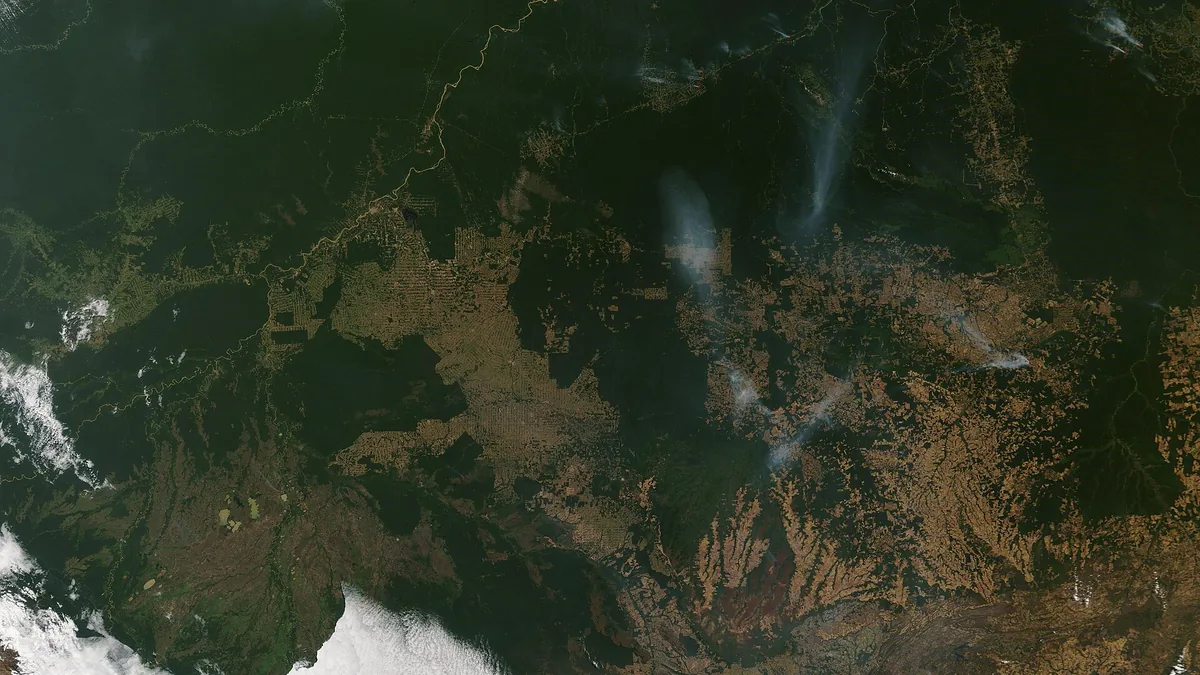
The Amazon has already lost close to a fifth of its original forest. Several scientific studies warn that, if deforestation keeps advancing, large areas could cross a tipping point and degrade into savannah-like vegetation, unable to sustain the water cycle it sustains today. The forest would stop making rain, and without rain it does not come back.
That is why Indigenous lands are, quite literally, the part of the map where the system still works.
Figures for area, population and forest: Science Panel for the Amazon, Amazon Assessment Report (2021). On the tipping point: Thomas Lovejoy and Carlos Nobre, “Amazon Tipping Point”, Science Advances (2018).
What caring means, seen from their side
In many Amazonian languages there is no word for “nature” apart from “us”. The river, the forest, the animals and people are part of the same fabric of life. Caring for the land is a way of being in the world, learned from childhood and held up by songs, stories, festivals and shared work.
So when a community loses its language or its elders, it loses the manual for looking after a territory. And that is why education —the Indigenous school, in their language and with their knowledge— is a tool for defending the forest as real as a map or a land title.
This is the idea behind the Network of Guardian Schools of the Amazon: that Indigenous schools and European schools learn together, in both directions.
What they face today: nine countries, one struggle
The Amazon is shared by Brazil, Peru, Bolivia, Colombia, Ecuador, Venezuela, Guyana, Suriname and French Guiana. Laws differ from one country to another, but the underlying conflict is the same in all nine: some people live on that land and others want what lies beneath it or what can be put on top of it.
It is a very concrete dispute over land, water, timber, gold, oil and transport routes, in which one side —Indigenous peoples— holds rights on paper and very little power to enforce them.
What follows is an honest summary of those fronts. Each country would deserve its own chapter, but these are the ones that recur in almost every community we work with or hear from.
Each section says where to check it. This is a live situation: figures and laws change, and it is worth looking at the date before quoting anything. This page was updated in September 2026.
1. The land: recognised on paper, contested in practice
Almost every Amazonian country recognises some Indigenous right to land in its Constitution. The problem is the cómo: for that right to be worth anything, the State has to mark out the territory, register it and remove those who should not be there. That process — demarcação in Brazil, titling in Peru, resguardo status in Colombia— is slow, costly and politically awkward, and it stops as soon as the government changes.
Meanwhile three things happen: land is occupied without title and then legalisation is requested (Brazil’s grilagem ), territories are broken up by mining or oil concessions granted over them, and communities are worn down by lawsuits lasting decades.
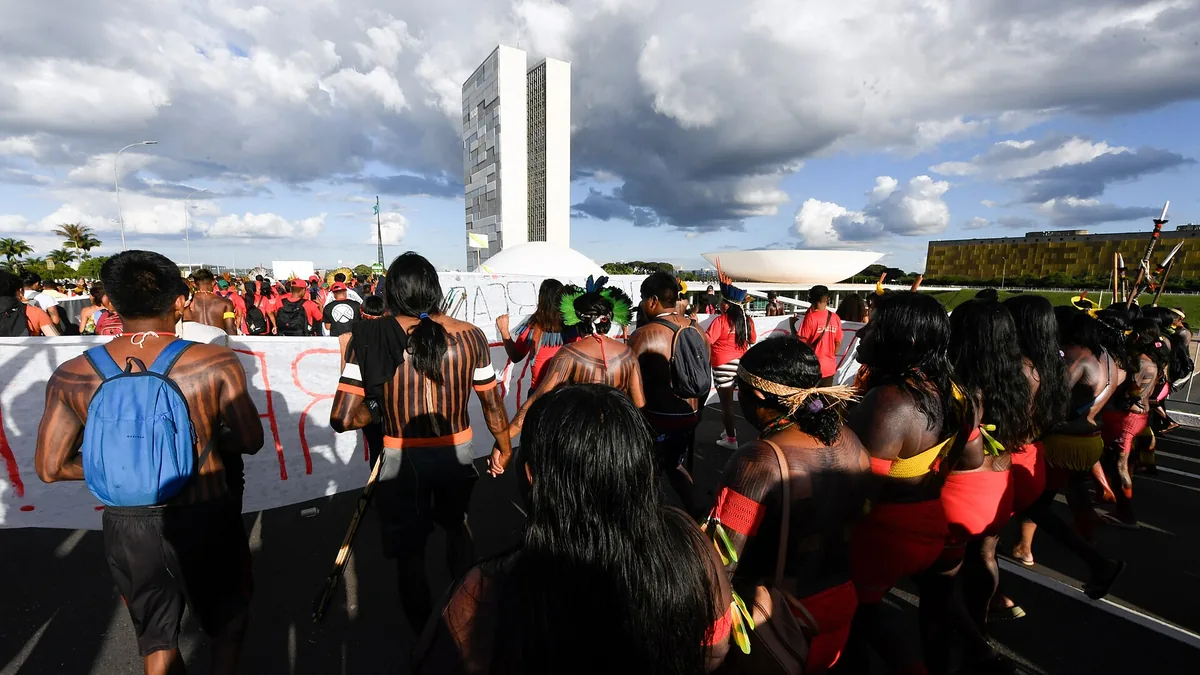
In Brazil, that dispute now has a name.
The Brazilian case: the “time frame” thesis
Everything above —the standing forest, the language, the school— rests on one thing: that the land is recognised. In Brazil that recognition is called demarcação, and it is now in dispute.
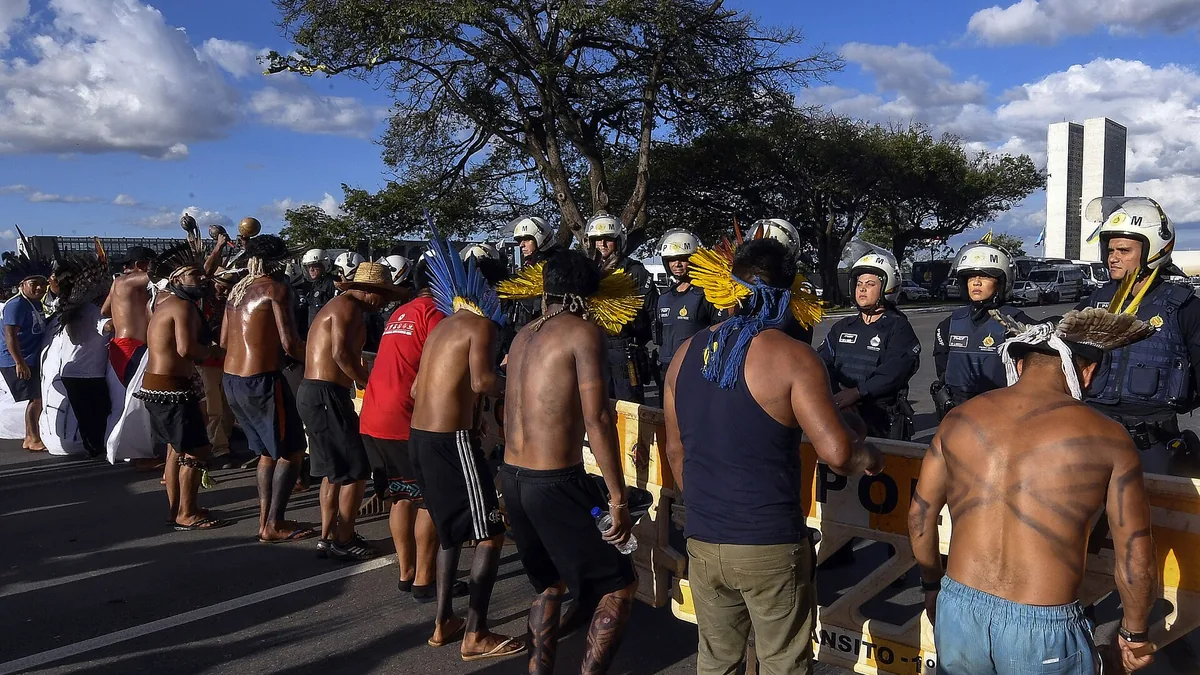
The marco temporal thesis holds that Indigenous peoples are onland intitled to land they physically occupied on 5 October 1988, the day the Brazilian Constitution was enacted, or over which a legal claim was already open on that date.
Put that way it sounds technical. What it means is this: peoples driven off their land before 1988 would be asked to prove they were there on the very day they had been thrown out. Under the military dictatorship, in the years of the rubber bosses, with the opening of roads and the arrival of the ranches, thousands of Indigenous families were forcibly displaced. The marco temporal turns that violence into the argument that strips them of their rights.
The 1988 Constitution does not say that. Its article 231 recognises Indigenous peoples’ “original rights over the lands they traditionally occupy”: original means prior to the State itself, not born on a given date.
How we got here
- 2009 · Raposa Serra do Sol. The Federal Supreme Court (STF) rules on that Indigenous land in Roraima and, among the conditions it sets, the marco temporal idea appears. It was said at the time to apply only to that case, but from then on it began to be used against other demarcations.
- 21 September 2023 · the STF strikes it down. The full Court declares the marco temporal thesis inconstitucional , by nine votes to two, in an appeal binding across the country (RE 1,017,365, Theme 1031). It looked like the end of it.
- October-December 2023 · Congress revives it. Congress passes bill PL 2903/2023 and writes the marco temporal into an ordinary law. The Presidency vetoes part of the text; Congress overrides the vetoes. That is how Law 14,701/2023.
- Since 2024 · the struggle continues at the Supreme Court. Several challenges are filed against that law (constitutional actions ADI 7582, 7583 and 7586, and declaratory action ADC 87). The reporting justice opens a conciliation panel to seek agreement between the parties. Indigenous organisations, led by APIB, reject it with an argument that is hard to answer: a constitutional right is not negotiated around a table.
Position in September 2026: Law 14,701/2023 remains in force and the Supreme Court has not ruled on the substance. This is a live matter: check the date before quoting anything.
What happens if that thesis is applied
This is what changes on the ground:
- Demarcations halted. Files that had been moving for years are shelved. Some peoples have been waiting more than thirty years.
- Recognised land called into question. The law opens the door to reviewing settled demarcations, so no territory is entirely safe.
- More invasions. Where the boundary is arguable, in come illegal logging, mining ( garimpo), cattle and soya. And behind them come threats, evictions and the killing of leaders.
- Economic activity inside the territory. The approved text makes works and business ventures on Indigenous land easier, with less weight given to the community’s decision.
- Uncontacted peoples at risk. Protection is weakened for those who have chosen no contact, for whom anand incounter can be fatal through common illnesses.
- No land, no school. A displaced community loses its village, and with it the school, the language taught there and the elders who keep it alive. This is the part that touches us directly.
That is why we say that intercultural education and the defence of the land are the same work. A strong Indigenous school documents the language, trains its own teachers and gives the community arguments and a voice of its own. A European school that grasps this stops seeing the Amazon as scenery and starts seeing it as a place where people with rights live.
Other laws bearing down in Brazil
The marco temporal is the best-known piece, but it does not advance alone. These are the open fronts that most affect the Amazon and its peoples:
- Weaker environmental permits. A reform of environmental licensing would let many projects be approved on a simple declaration by the company itself. Critics call it “the devastation bill”.
- Mining on Indigenous land. Proposals are under way to allow mining, oil and large dams inside Indigenous territories.
- Major infrastructure. Rebuilding the BR-319 highway, which crosses a still-intact block of forest between Manaus and Porto Velho, and the soya railway (Ferrogrão) are the two projects most likely to push the agricultural frontier open.
- Oil at the mouth of the Amazon. Exploration in the so-called Margem Equatorial is moving ahead despite warnings about the reefs and the coastal communities.
These bills change name and number often. We describe them by what they do rather than by their number; for detail and dates, the sources are below.
2. What they want from underneath
Gold and mercury
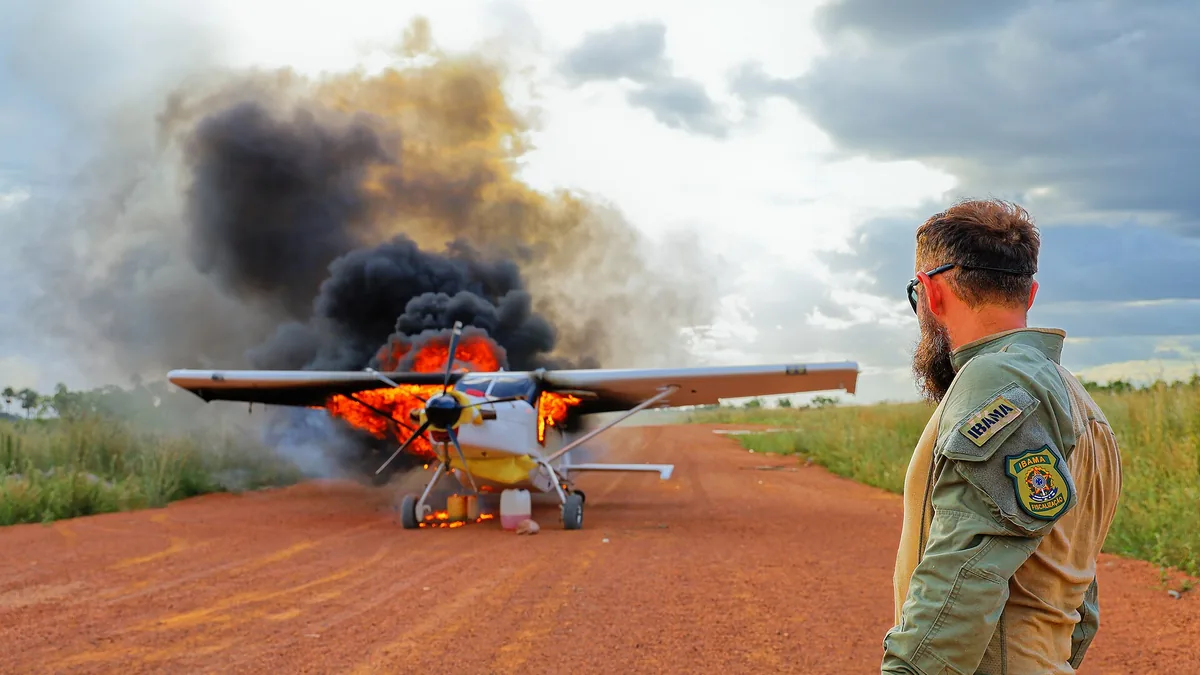
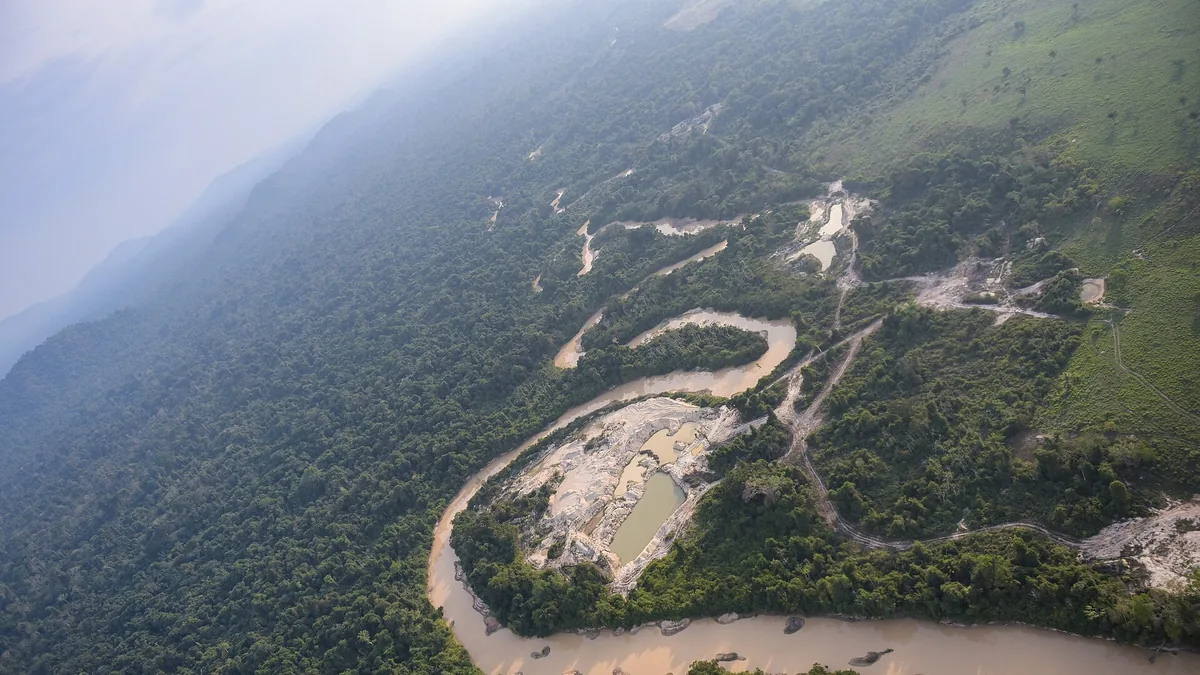
Illegal gold mining — garimpo— is probably the fastest-destroying threat. It comes up the rivers with dredgers and diggers, wrecks the riverbed and uses mercury to separate the gold. That mercurand inds up in the fish, and fish are the staple food of riverside communities: worrying levels have been documented in women and children in several regions. With the dredgers come alcohol, prostitution, weapons and disease.
The gravest and best-known case is that of the Yanomami people, on Brazil’s border with Venezuela: in January 2023 the Brazilian government declared a public health emergency in their territory over malnutrition and malaria linked to the invasion by thousands of illegal miners.
Oil and gas
In the western Amazon —Ecuador, Peru, Colombia and western Brazil— much of the subsoil is divided into oil blocks that overlap Indigenous lands and nature reserves. Repeated pipeline spills have polluted whole rivers on which communities depend, communities that gained nothing from the extraction.
In Ecuador, the dispute over Yasuní went to the ballot box: in August 2023 citizens voted in a referendum to leave the ITT block’s oil in the ground, in a national park where uncontacted peoples live. In Brazil the new frontier is offshore: exploration in the so-called Margem Equatorial, off the mouth of the Amazon.
Timber
Illegal logging opens the first tracks through which everything else later arrives. Trees are cut inside Indigenous lands and reserves, the timber is “laundered” with permits from another estate, and exported. Communities that report it are marked out.
Where to check this
reports by Brazil’s Public Prosecutor’s Office and Ministry of Health on the Yanomami emergency; RAISG (maps of pressures and threats across the nine countries); ISA; Amazon Watch; data from MapBiomas on mining.
3. What they want to put on top
If mining and oil go after what is below, the other half of the problem goes after the surface.
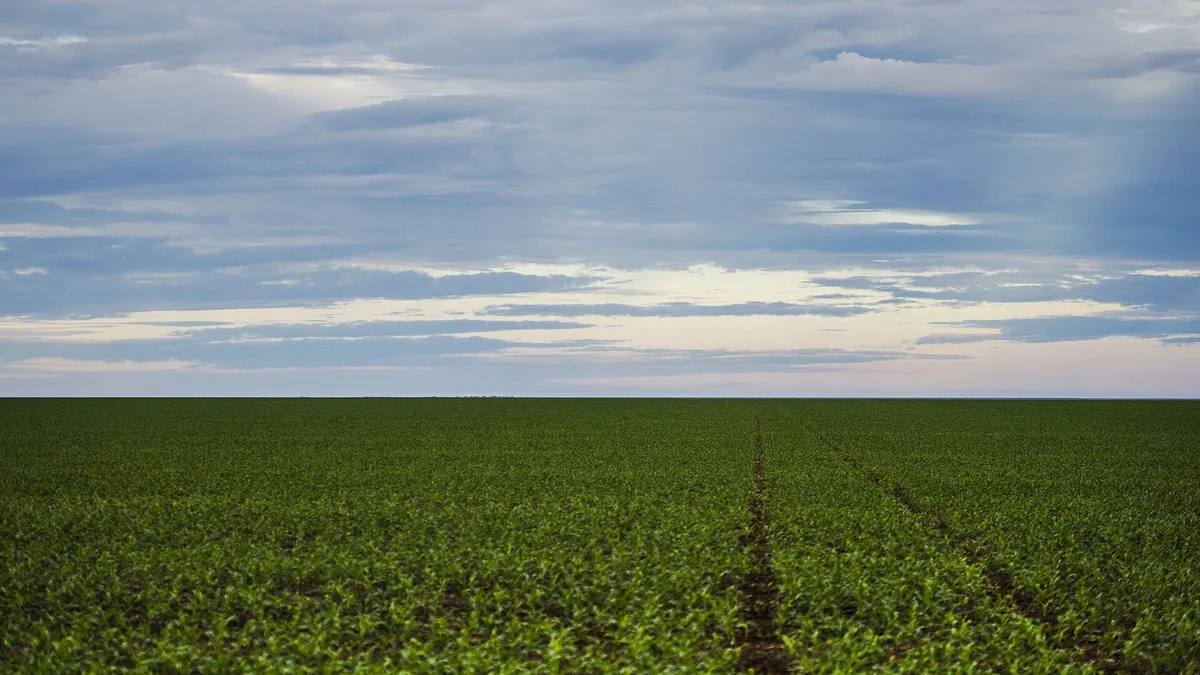
- Cattle and soya. By far the leading cause of deforestation in the Brazilian Amazon. First the trees are felled, burned and turned to pasture; then, if the land allows, soya arrives. Much of that output is exported, and some ends up in Europe as animal feed.
- Roads. A new road is the axis along which everything on either side gets occupied. Rebuilding the BR-319, between Manaus and Porto Velho, would cut through one of the best-preserved blocks of forest left.
- Dams. Large hydroelectric dams flood territories, cut off fish migration and displace whole communities. Belo Monte, on the Xingu river, is the example that has marked the region’s peoples most.
- Transport routes for grain. Railways such as the Ferrogrão project and the waterways that channel the rivers are designed to move the harvest, and they bring ports, silos and more deforestation with them.
Where to check this
MapBiomas and PRODES/INPE (deforestation in Brazil), RAISG (infrastructure works across the Pan-Amazon), ISA reports on Belo Monte and the BR-319.
4. Who is pushing: the companies and the chains that reach us here
Behind almost every front above there is a market, and that market is almost never in the Amazon.
Gold from the garimpo is melted down and sold; beef and soya are exported; oil is refined elsewhere; timber ends up as furniture and flooring. International mining, oil, agri-food and trading companies —and the banks and funds that finance them— are part of the problem even if they never set foot in a village. And European consumption is inside that chain.
There are attempts to break it. The European Union has approved a regulation on deforestation-free products that will require companies to show that the soya, beef, timber, cocoa or coffee they sell does not come from deforested land. Its application has been repeatedly delayed, and Indigenous organisations are asking that it also verify respect for their rights, and not only forest cover.
There is also a principle that almost nobody fully honours: free, prior and informed consent, recognised in ILO Convention 169 and in the United Nations Declaration on the Rights of Indigenous Peoples. In practice, many consultations happen late, badly, or with the decision already taken.
Where to check this
Regulation (EU) 2023/1115 on deforestation; ILO Convention 169; UN Declaration on the Rights of Indigenous Peoples (2007); Amazon Watch and Global Witness reports on supply chains.
5. Defending the land is dangerous
Year after year, Latin America is the region where most land and environmental defenders are killed, and a large share of those cases is in the Amazon. Brazil, Colombia and Peru top almost every list. The figures are published each year by Global Witness; in Brazil, CIMI also documents invasions, conflicts and deaths in its annual report.
The murder of the indigenist Bruno Pereira y del periodista Dom Phillips in the Javari valley, in June 2022, put an international name to something that happens continuously and almost always without witnesses.
Alongside direct violence there are two quieter forms of pressure: criminalisation —charging leaders with “trespass” or “terrorism” to wear them down in the courts— and the presence of armed economies: on the borders of Colombia, Peru and Brazil, coca and drug-trafficking routes have entered Indigenous territories, including the recruitment of young people.
Peoples in voluntary isolation
The Amazon is home to todavía pueblos que han decidido no tener contacto con el resto de la sociedad. El valle del Javarivalley in Brazil and several reserves in Peru hold most of them. For them an unwanted encounter is not an incident: a common flu can wipe out a whole family. Any weakening of their protection —a road, a mission, a concession— directly threatens their survival.
Where to check this
Global Witness annual reports; the report “Violência contra os Povos Indígenas no Brasil” (CIMI); Survival International and FUNAI on uncontacted peoples.
6. What breaks first: health and school
When a territory is invaded, the first thing to fail is the services that hold people up.
La Indigenous health service depends on teams that must reach scattered communities by boat or light aircraft. When mining moves in, malaria and malnutrition rise, and the teams cannot work safely. The Yanomami emergency of 2023 showed how far that can go.
La Indigenous school suffers the same from another side. Brazilian law has recognised a school of their own, bilingual and intercultural, since 1988; in practice most have no internet connection, many only cover the first years —to carry on studying you have to leave the village— and much of the Indigenous teaching staff works on temporary contracts, low pay and late wages.
To this has been added, very quickly, the arrival of satellite internet in villages that had never had coverage. It brings good things —reporting an emergency, denouncing an invasion, studying at a distance— and also problems nobody prepared for. That is why we accompany the schools rather than simply delivering equipment.
Where to check this
INEP School Census (Brazil); Siasi/Sesai for Indigenous population and health data; our own 2025 report.
7. New business with the forest standing
In recent years a different, less visible pressure has appeared: carbon contracts. Broker companies arrive in communities with thirty- or forty-year agreements to sell their forest’s carbon credits, written in a language and with clauses almost nobody there can assess.
Some of those projects are serious. Others have been signed without real consent, without independent legal advice and with very unequal shares, to the point that the Brazilian and Peruvian press has popularised the phrase “carbon cowboys” for them. Indigenous organisations do not reject the mechanism outright: they ask for clear rules, genuine consultation and that they be the ones to decide.
The lesson is the same as ever: any proposal arriving from outside, however green it sounds, needs the community to be able to understand it and decide on its own terms. That, too, is a question of education.
Where to check this
investigative journalism on carbon contracts in the Brazilian and Peruvian Amazon; COICA and APIB positions on carbon markets.
8. The climate, no longer a forecast
The Amazon has lost close to a fifth of its original forest, and recent years have brought extraordinary droughts: rivers at record lows, communities cut off because the boat can no longer get through, dead fish, and fire seasons that grow longer and longer.
Several studies warn that large areas could cross a tipping point and degrade into savannah-like vegetation, unable to sustain the water cycle it sustains today. Put another way: the forest would stop making rain.
Those who have contributed least to climate change are the first to suffer it, and they are also the ones who have best kept what is left. That is why we insist: there is no climate justice without justice for Indigenous peoples.
Where to check this
Lovejoy and Nobre, “Amazon Tipping Point” (2018); IPCC reports; Science Panel for the Amazon (2021); drought and fire data from INPE and MapBiomas.
9. And what they themselves do: a movement
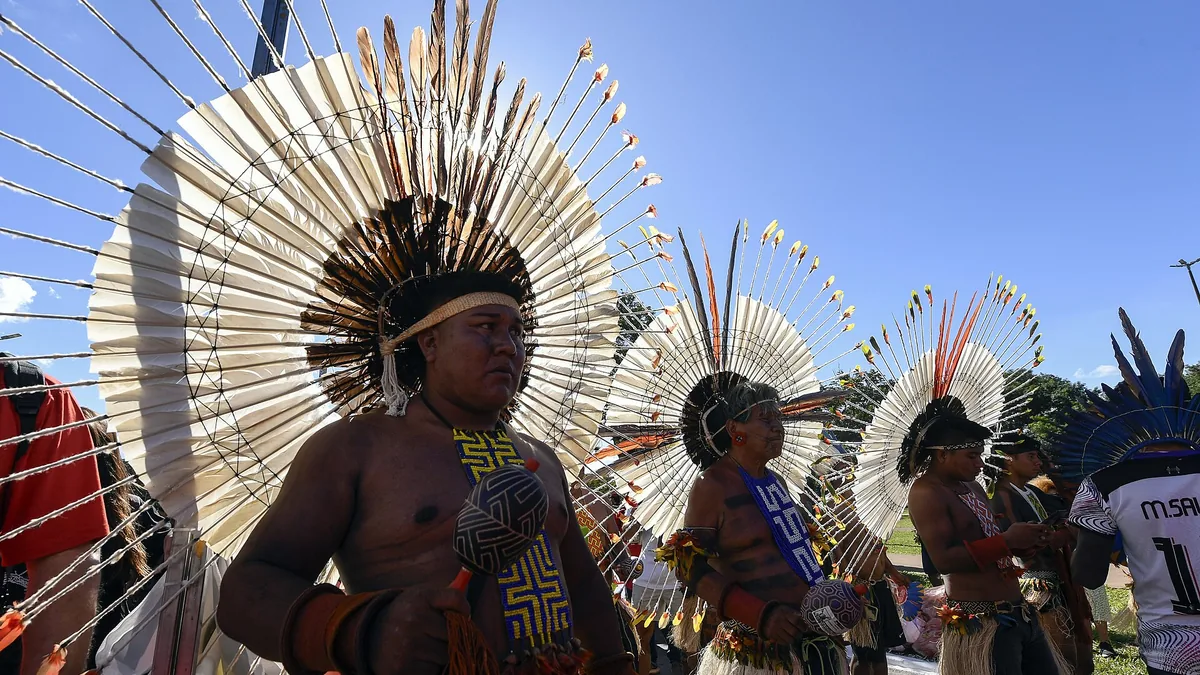
Telling only the threats gives a false picture. The Indigenous peoples of the Amazon have been organising for half a century, and have won things that looked impossible.
- Their own organisations in all nine countries, coordinated through COICA. In Brazil, APIB; in Peru, AIDESEP; in Colombia, OPIAC; in Ecuador, CONFENIAE. And in the Juruá valley where we work, OPIRJ.
- Litigation and institutional presence. They have taken their cases to Brazil’s Supreme Court, to the Inter-American Court of Human Rights and to the UN, winning rulings that are now points of reference.
- Territorial monitoring. Their own patrols, drones, GPS and reporting apps run by the communities: many of the invasions that get stopped are spotted by them first.
- Politics. Indigenous members of parliament, and in Brazil a Ministry of Indigenous Peoples created in 2023.
- Education and language. Their own schools, teachers trained in the community, dictionaries and materials made by Indigenous teachers. It is the slowest part, and the hardest to undo.
That last line is where our work fits, and the reason this association exists.
Where to check this
websites of COICA, APIB, AIDESEP, OPIAC, CONFENIAE and OPIRJ; Inter-American Court of Human Rights rulings in Indigenous cases.
10. Acre: the struggle that made our work possible
All of the above is easier to grasp by looking at one particular place. Ours is Acre, the state in Brazil’s far west where the Escola Ixubãy Rabuĩ Puyanawa and the Nukini school we work with are. And in Acre this story has names.
From rubber to forced labour
In the late nineteenth century the rubber boom brought thousands of workers from north-eastern Brazil to Acre. The seringais ran on a system of debt: the boss advanced food and tools, the seringueiro paid in latex, and the account was never settled. Indigenous peoples were hunted, displaced or put to work under the same conditions, the Puyanawa and the Nukini among them: their land was taken over by seringais and their language nearly disappeared.
Chico Mendes and the empates
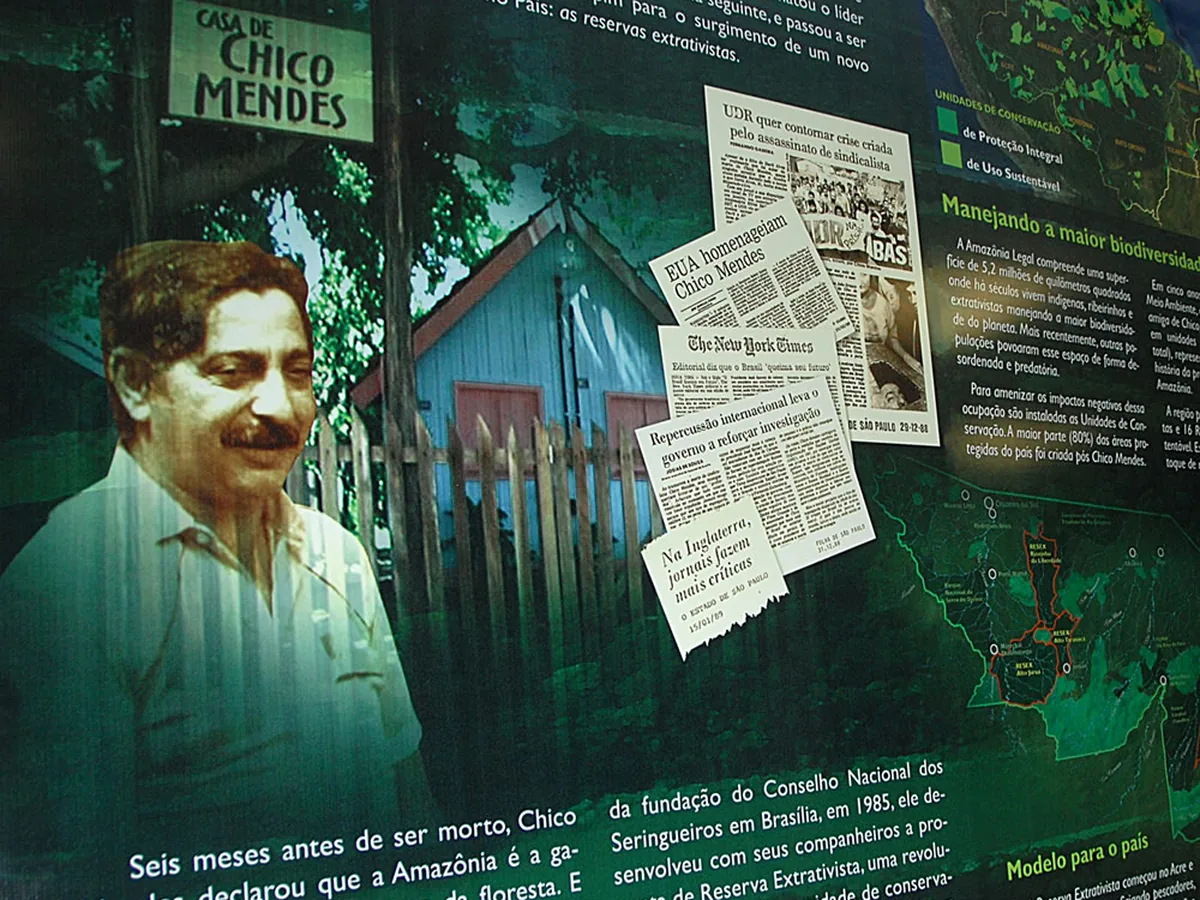
In the 1970s, when rubber stopped being profitable, many seringais were sold to cattle ranchers who came to clear the land. The rubber tappers of Xapuri answered with the empates: whole families, children included, standing in front of the chainsaws to stop the felling. Unarmed.
Francisco Alves Mendes Filho, «Chico Mendes» (1944-1988), rubber tapper and union leader, was the one who turned that resistance into a proposal: extractive reserves, territories protected con the people living inside them, not sin them. His idea was simple and new: a standing forest feeds those who know how to live in it, and so whoever lives in it is the best possible guardian.
Chico Mendes was murdered at his own front door on 22 December 1988, in Xapuri, on a landowner’s orders. His death had a worldwide impact he had never achieved in life, and two years later the first extractive reserves were created.
The Alliance of the Peoples of the Forest
What that period left above all was an alliance. Until then, rubber tappers and Indigenous people had been set against each other: one group entered the other’s land. In 1989 the Aliança dos Povos da Florestawas sealed in Rio Branco: for the first time, the two peoples of the forest recognised each other as allies against those who came to cut it down.
That is where the word behind our honorary member’s name comes from. Txai, in the Huni Kuin language, means something like “more than a friend: a part of me in you and a part of you in me”. It became the greeting of that alliance, and gave its title to the album Txai that Milton Nascimento recorded after travelling through Acre in 1989.
Terri Valle de Aquino, the other txai
Beside that alliance there was also an anthropologist. Terri Valle de Aquino, trained at the Universidade de Brasília, came to Acre in the mid-1970s to carry out his master’s research among the Kaxinawá (Huni Kuĩ). When he went up the Jordão river to its headwaters he found something he had not expected: Indigenous communities tapping rubber in conditions of debt slavery.
Instead of writing it up and leaving, he stayed. He was the first in his field to carry out the socio-economic and land surveys of Acre’s Indigenous peoples river by river in the Upper Juruá —the technical work without which no demarcation is possible—, worked at FUNAI and was one of the founders of the Comissão Pró-Índio do Acre.
The Huni Kuĩ gave him the same name they gave Macedo: txai. Acre has two, and both appear in this story.
Txai Macedo
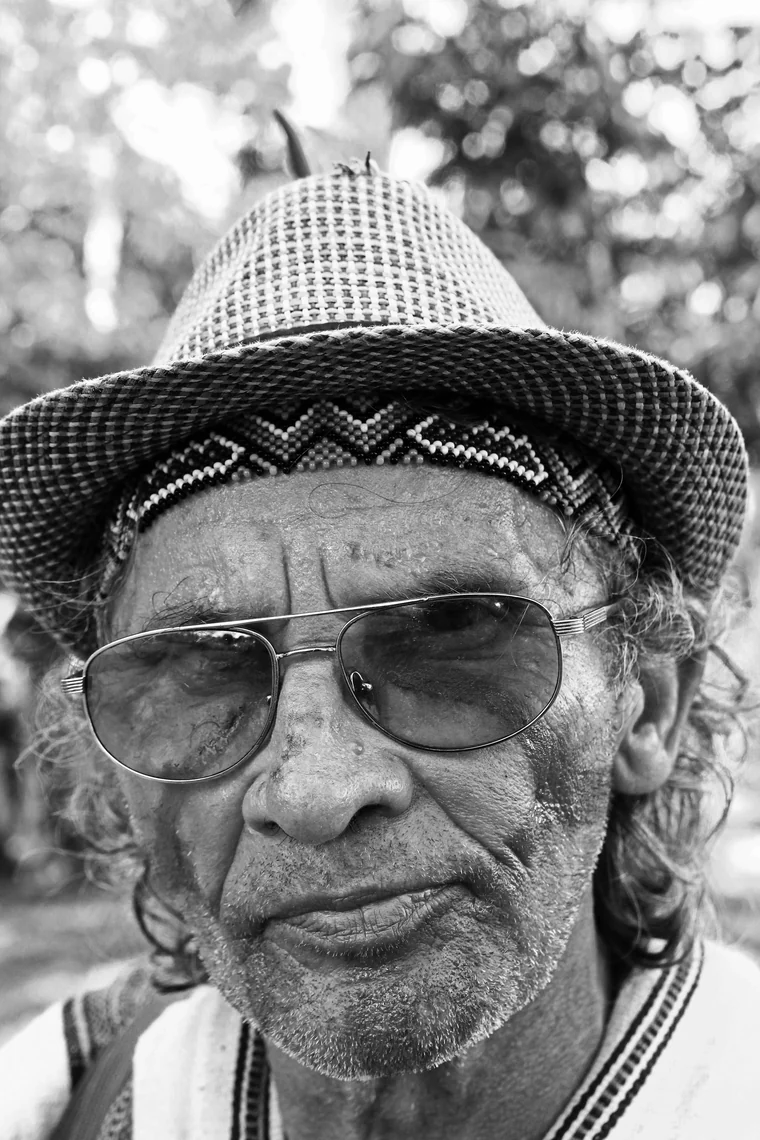
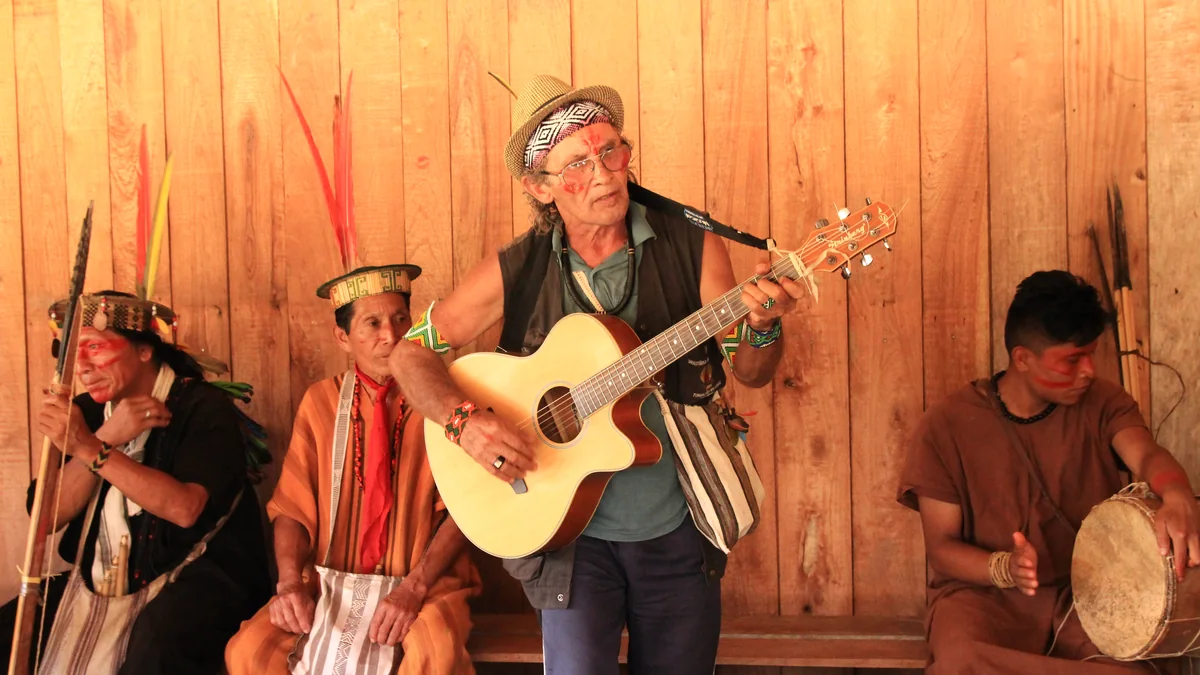
Antônio Luiz Batista de Macêdo, «Txai Macedo» (1952-2026) was one of the people who held all that up from the inside. He was born in the Seringal Transval, on the banks of the Muru river (Acre), next to a Huni Kuin community; he was a rubber tapper, river pilot, mechanic, indigenist, poet and singer. From the 1970s he worked with the anthropologist Terri Valle de Aquino and with the Comissão Pró-Índio do Acre travelling rivers and villages to explain to communities what their rights were and to support the demarcation of their lands.
He was a friend and colleague of Chico Mendes, central to the Aliança dos Povos da Floresta and to the struggle that led in 1990 to the creation of the Reserva Extrativista do Alto Juruá, the first of its kind in the world, in the same valley where we work today. He lived on Puyanawa land and raised his family there.
And he was, until his passing, friend and indigenist mentor to Adolf Sanz, founder of this association: one of the first people to believe in the Network of Guardian Schools. His full biography is in About us.
Acre’s Indigenous school has a long history
There is a piece of this story that is almost never told and that touches us directly. While demarcations were being fought for, the Comissão Pró-Índio do Acre began training Indigenous teachers y a agroforestry agents from the communities themselves, at a time when the idea of an Indigenous person teaching in their own language in their own village sounded utopian.
Much of the Indigenous schooling that exists in Acre today came out of that: teachers from the community, materials made there, teaching in their own language. When we work alongside the educators of the Escola Ixubãy Rabuĩ Puyanawa, we are working within that tradition, inventing nothing.
And today
The pressure did not go away. Acre still has deforestation, advancing cattle ranching and roads that people want to push through to the Pacific; and the communities of the Juruá still defend what Chico Mendes and Txai defended: that the forest stays standing with its people inside it.
What has changed is the tool. Where there were once empates, there are now schools: trained Indigenous teachers, a documented language, their own materials, and children from two continents talking to each other by video call. It is slower and less heroic, and it is what we know how to do.
Where to check this
Comissão Pró-Índio do Acre (cpiacre.org.br), que publica entrevistas con Terri Aquino y la historia de la formación de docentes indígenas; el archivo del Instituto Socioambiental (ISA) sobre las extractive reserves y la Aliança dos Povos da Floresta; el Instituto Chico Mendes de Conservação da Biodiversidade (ICMBio), que lleva el nombre de Chico Mendes; y la biografía de Txai Macedo en About us.
What we do with all this
We are not a legal organisation and we do not stand in for those who carry this struggle: APIB, each people’s own organisations, CIMI, ISA and many others. Our work is smaller and slower, and it goes another way:
- Telling it properly, here. So that a school in Catalonia knows the marco temporal exists, and understands where it comes from. Pupils who understand it become, a few years from now, a public that does not swallow it.
- Strengthening the Indigenous school there. Teacher training, their own materials, connectivity and equipment: a school that works is a community with more tools to defend itself.
- Giving the floor to those whose it is. In our video calls and exchanges it is Puyanawa and Nukini people who speak, not us on their behalf.
You can see how this works out in the Network of Guardian Schools and in the schools in the Amazon.
To understand it from within
Behind all this lies a discussion deeper than the legal one: what a river is, who can hold rights and what living well means. We have gathered that part on a separate page, with its sources and bibliography.
The peoples we work with
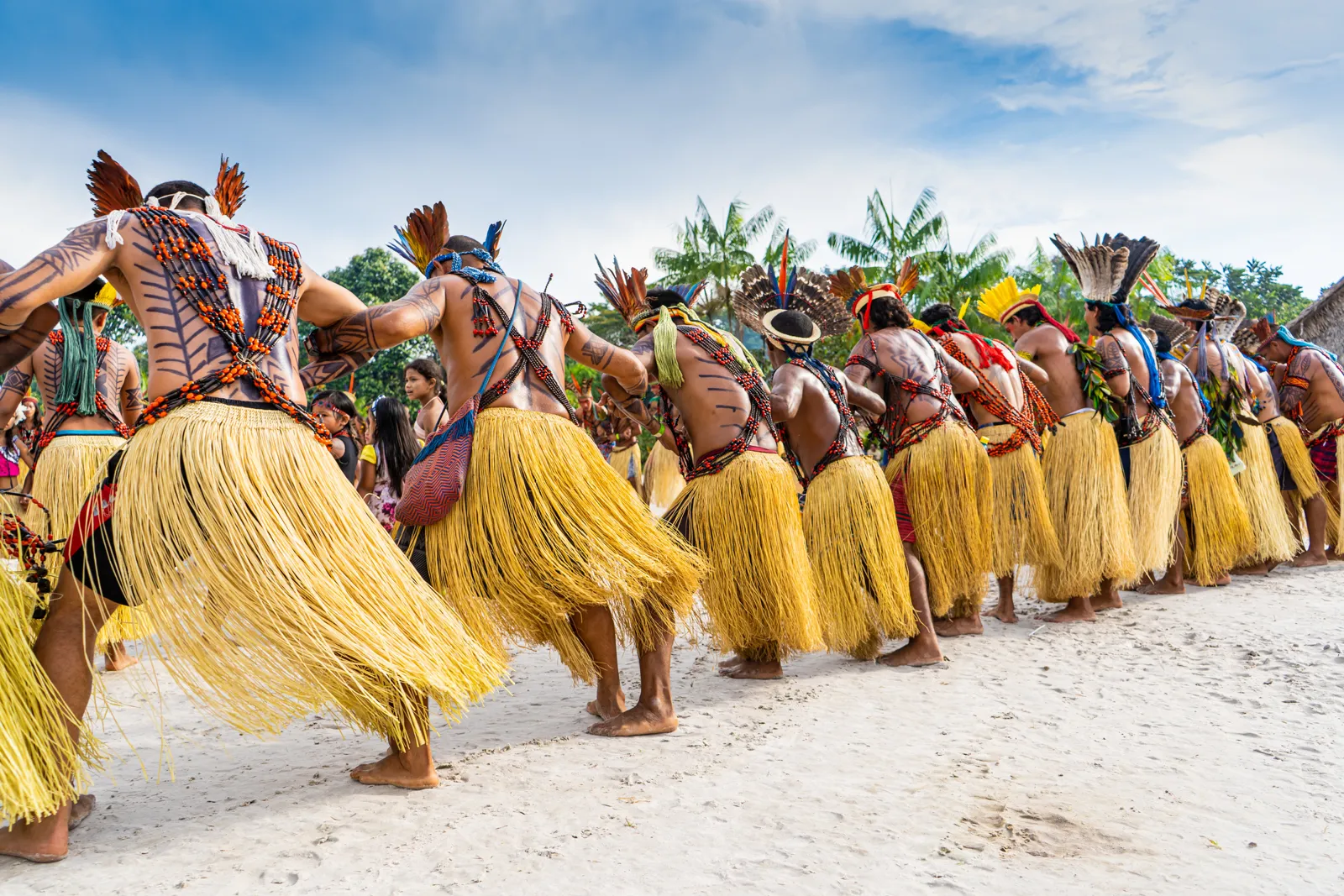
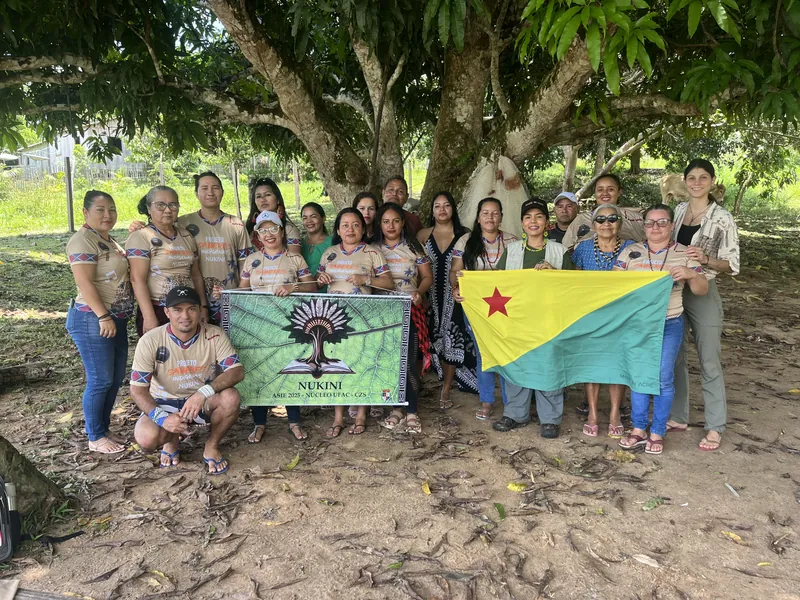
The Network grew out of our bond with the Puyanawa people, in the Juruá valley (Acre, Brazil), and is now extending to the Nukini people. The two communities are neighbours and share a history: rubber, captivity and recovery.
-
Puyanawa
Mâncio Lima, Acre (Brazil) · Pano language family
Enslaved during the rubber boom and stripped of their language, today they are bringing it back through their school, their songs and their festivals. It all began with them.
-
Nukini
Mâncio Lima, Acre (Brazil) · Pano language family
Neighbours of the Puyanawa, in the Môa highlands, beside the Parque Nacional da Serra do Divisor. Extending the Network to their school is under way.
How we speak about Indigenous peoples
- We tell what the communities themselves want told, using the names they use.
- We do not use their culture as decoration: no costumes, no storybook “Indians”, no ceremonies taken out of context.
- Photographs are published with permission, and we do not publish images in which children’s faces can be recognised.
- When we give figures, we say where they come from. If we are not sure, we do not state it.
Where to check all this
The sources, one by one
- Povos Indígenas no Brasil, by the Instituto Socioambiental (ISA): the reference encyclopaedia on Brazil’s Indigenous peoples, with a profile for each one.
- FAO and FILAC (2021), “Forest governance by Indigenous and tribal peoples”: a review of more than 300 studies on deforestation and land rights.
- Science Panel for the Amazon (2021), Amazon Assessment Report: the state of the Amazon according to more than 200 scientists.
- RAISG (Amazonian Network of Georeferenced Socio-Environmental Information): maps and data on Indigenous lands across the nine Amazonian countries.
- INEP (Brazilian Ministry of Education): School Census, with data on Indigenous schools.
- Constitution of Ecuador (2008), articles 10 and 71 to 74: nature as a subject of rights.
- Law 19/2022, of 30 September, granting legal personality to the Mar Menor lagoon and its basin (Spain).
- Christopher D. Stone, «Should Trees Have Standing?» (1972), the article that opened the legal debate.
- APIB (Articulação dos Povos Indígenas do Brasil): the voice of the Brazilian Indigenous movement on the marco temporal and the bills in progress.
- CIMI (Conselho Indigenista Missionário): its annual report “Violência contra os Povos Indígenas no Brasil” documents invasions, conflicts and killings.
- Federal Supreme Court of Brazil: la sentencia del recurso RE 1.017.365 (Tema 1031), de septiembre de 2023, y las acciones contra la Law 14,701/2023.
- Law 14,701 of 20 October 2023: the official text is published by the Presidency of the Republic of Brazil.
- Constitution of Brazil (1988), articles 231 and 232: los derechos original de los pueblos indígenas sobre sus tierras.
- RAISG (Amazonian Network of Georeferenced Socio-Environmental Information): maps of pressures and threats across the nine Amazonian countries.
- COICA and the national organisations (APIB, AIDESEP, OPIAC, CONFENIAE, OPIRJ): the voice of the peoples themselves.
- Global Witness: annual report on murdered land and environmental defenders.
- MapBiomas y PRODES/INPE: deforestation, mining, fire and land use in Brazil.
- ILO Convention 169 y UN Declaration on the Rights of Indigenous Peoples (2007): free, prior and informed consent.
- Regulation (EU) 2023/1115 on deforestation-free products.
The photographs on this page that are not ours come from Wikimedia Commons under licences that allow their use: each caption gives the author, the institution and the licence. Photographs of our schools and communities are our own.
The full academic bibliography is in Where our perspective comes from.
Page updated on 19 September 2026.
“The Network grows with you” campaign
We are looking for 50 regular supporters this school year
A monthly contribution, however small, lets us plan the school year without depending on a grant.