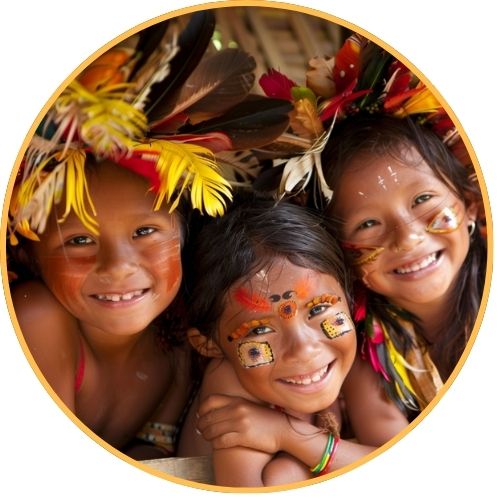
The Amazon Guardian Schools Network connects schools in Spain with Indigenous schools and communities in the Amazon to build lasting educational links around interculturality, languages, memory, territory, biodiversity, human rights, global citizenship, and eco-social and climate justice.
The Network promotes active, situated and cross-curricular learning through teacher training, shared digital tools, technical support, its own teaching materials, environmental activities and school exchanges. Each process is shaped by the educational priorities, languages, pace and decisions of the participating communities and schools, encouraging mutual learning and dialogue between different realities.
Technology is not seen as an end in itself, but as a tool serving education, community autonomy, the production of communities’ own resources and the responsible use of images, voices, stories and traditional knowledge. This approach starts from the interdependence of cultures, territories and ecosystems, engages with principles such as “buen vivir” (living well) and is linked to the emerging recognition of the rights of nature and to the care of life systems.
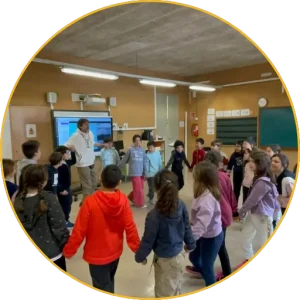
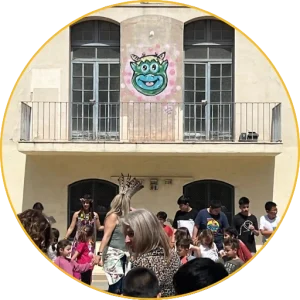
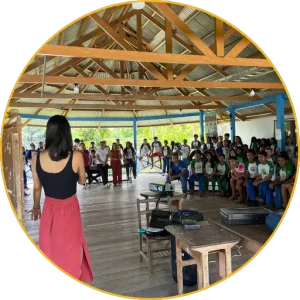
In Spain, the Network offers primary and secondary schools activities for exploring the collective rights of Indigenous peoples and the relationships between territory, consumption, technology and community life. Exchanges with Amazonian schools make it possible to address these issues through real experiences, challenge stereotypes and strengthen intercultural coexistence.
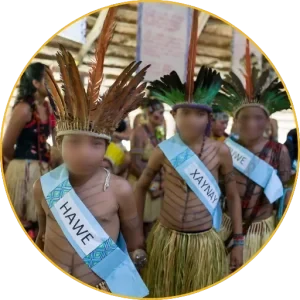
The exchanges are designed as spaces for reciprocal learning in which each school and community takes part from its own reality. Through the knowledge and experiences that Indigenous communities choose to share, the Network invites participants to explore different worldviews, the principles of “buen vivir” and ways of relating to the land based on care, reciprocity and interdependence. This dialogue also encourages reflection on the recognition of nature as a subject of rights and on the collective responsibilities this entails.
Our journey
A network linking schools in Catalonia and the Juruá valley (Acre, Brazil) since 2016
- Catalonia
- Amazon · Juruá valley
- 2016
Guardians de l’Amazònia is born
The association is founded and the album of traditional songs is recorded in the Puyanawa village.
- 2017
The Schools Network begins
First visits by Puyanawa leaders to Catalan schools, covered by TV3 and El Periódico.
- 2018
A story for the classroom
Puwe and Vari visit schools and the book “Els Puyanawa i l’Eruga de colors – Hêda Cêkaya” is published.
- 2019
School exchanges
First exchanges between Escola Ixubãy Rabuī Puyanawa and Catalan schools, and a Guardian Schools gathering at La Mora beach.
- 2022
Photo exhibition and storytelling
The “Poble Puyanawa” photo exhibition and storytelling sessions of “Els Puyanawa i l’Eruga de colors – Hêda Cêkaya” in libraries and schools.
- 2022
The pilot project takes shape
Design of a pilot project on digital inclusion, teacher training and environmental education with Escola Ixubãy Rabuī Puyanawa, so that its teachers can use technology in the service of their culture and community.
- 2023
Connectivity and training at Escola Ixubãy
With support from Fons Català de Cooperació al Desenvolupament, work begins on improving the school’s connectivity and training its teachers.
- 2024
Assessment and new visits
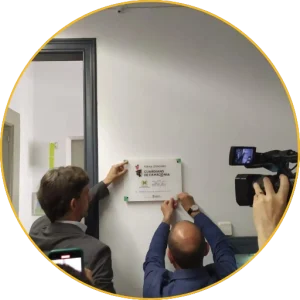
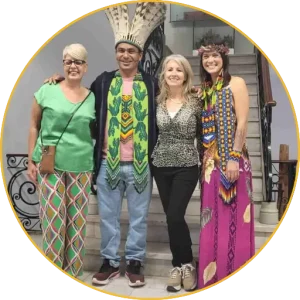
Assessment with the Txai Foundation at Escola Ixubãy. Puwe and Txuku Puyanawa visit Guillem de Claramunt and El Palau.
- 2025
Digital inclusion and literacy
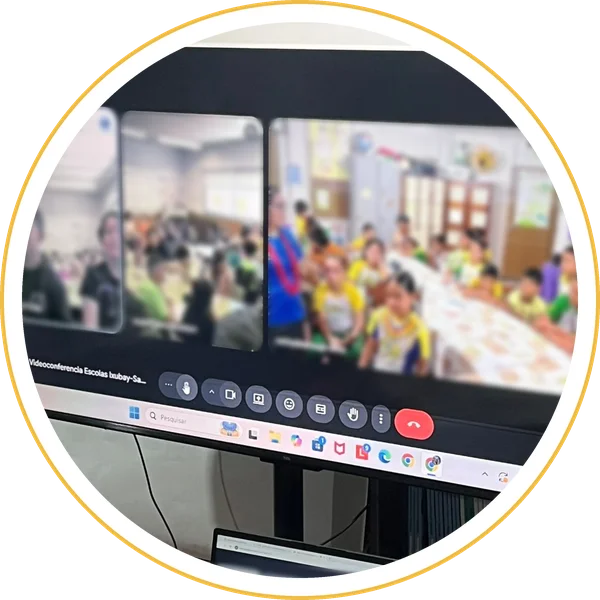
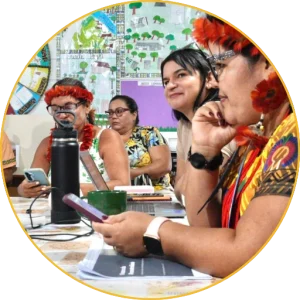
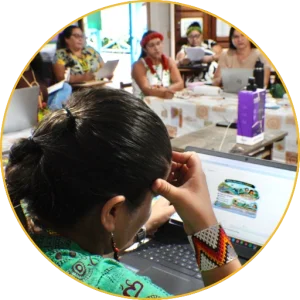
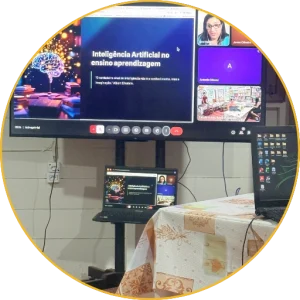
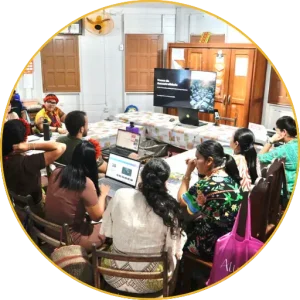
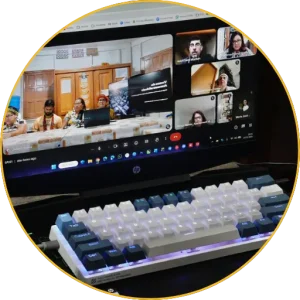
22 Indigenous educators trained (52 hours, 3 modules) and intercultural video calls with Catalan schools.
- 2026
Projects led by Indigenous teachers
Mentoring for project development, new video calls, such as with Escola Sant Cristòfor in Begues, and the network’s extension to the Nukini people.
“The Network grows with you” campaign
We are looking for 50 regular supporters this school year
A monthly contribution, however small, lets us plan the school year without depending on a grant.
Be part of EiAmazonia
Supporters, volunteers, schools, Indigenous communities, professionals, institutions and companies can take part in the Network in different ways. Explore the ways to collaborate and find the one that best suits you or your organisation.